
Dictionary entry 12 of 137 · Primary image-system
Man of Lawlessness
Lawless power wearing law-like form and elevating itself beyond review.
Complete dictionary reading
Context, form, interpretation, and limits
Principal source or earliest context
2 Thessalonians 2 describes a man of lawlessness, deception, self-exaltation, and a restraining force or figure whose identity is not named.
Historical interpretations
Patristic, Reformation, modern political-theology, and futurist readings identify the lawless one and the restrainer in sharply different ways. The katechon has been read as empire, law, proclamation, providence, spirit, or a future agent.
Visual anatomy
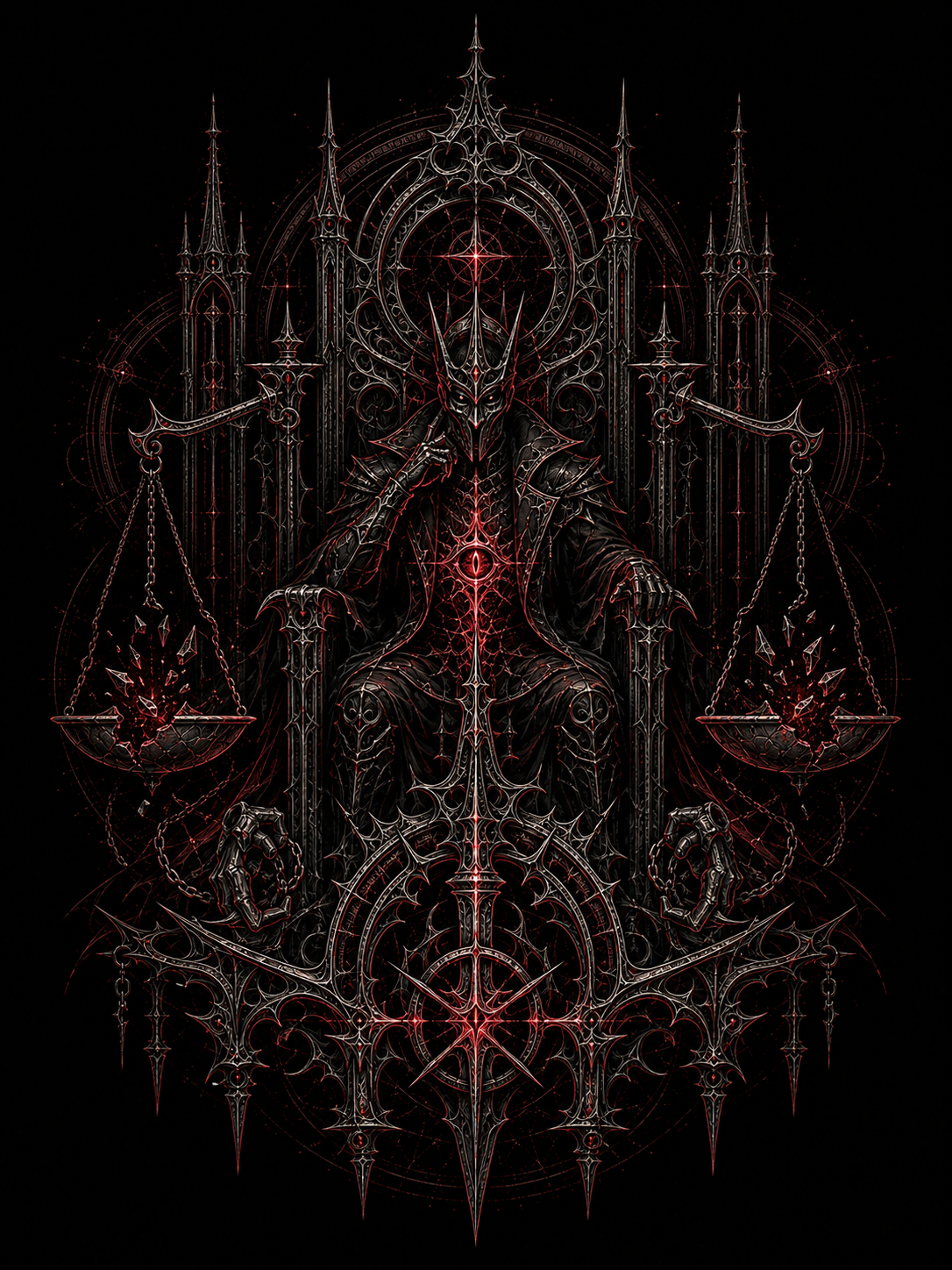
A formal legal frame encloses a broken center. A second bar appears to restrain the opening but also thickens into a control wall.
Antichrist.net visual convention: Legal frame around a broken center with an ambiguous restraining bar.
Antichrist.net reading
The civic reading is the paradox of lawless power using procedural language, emergency rules, or moral necessity to exempt itself from ordinary limits.
Misuse warning
Do not turn political disagreement into a claim that an officeholder is the man of lawlessness. Analyze reviewability, coercion, and exemption instead.
What this symbol does not prove
It does not prove the identity of any living person or establish that a current emergency, court, state, or church is the final restrainer or lawless one.
Disputed readings and unresolved questions
The authorship, chronology, identity of the restrainer, and relation to other apocalyptic figures are disputed.
Suggested comparison or manuscript example
Compare 2 Thessalonians 2 with Hippolytus and later political-theology reception.
Source discipline
Source notes
-
2 Thessalonians 2 USCCB Bible
Man of lawlessness and the disputed restrainer/katechon tradition.
-
On Christ and Antichrist New Advent text of Hippolytus
Early synthesis of Danielic, Pauline, and Revelation motifs.
-
Editorial Policy
Source labeling, uncertainty, anti-targeting, and moderation boundaries.