
Dictionary entry 14 of 137 · Primary image-system
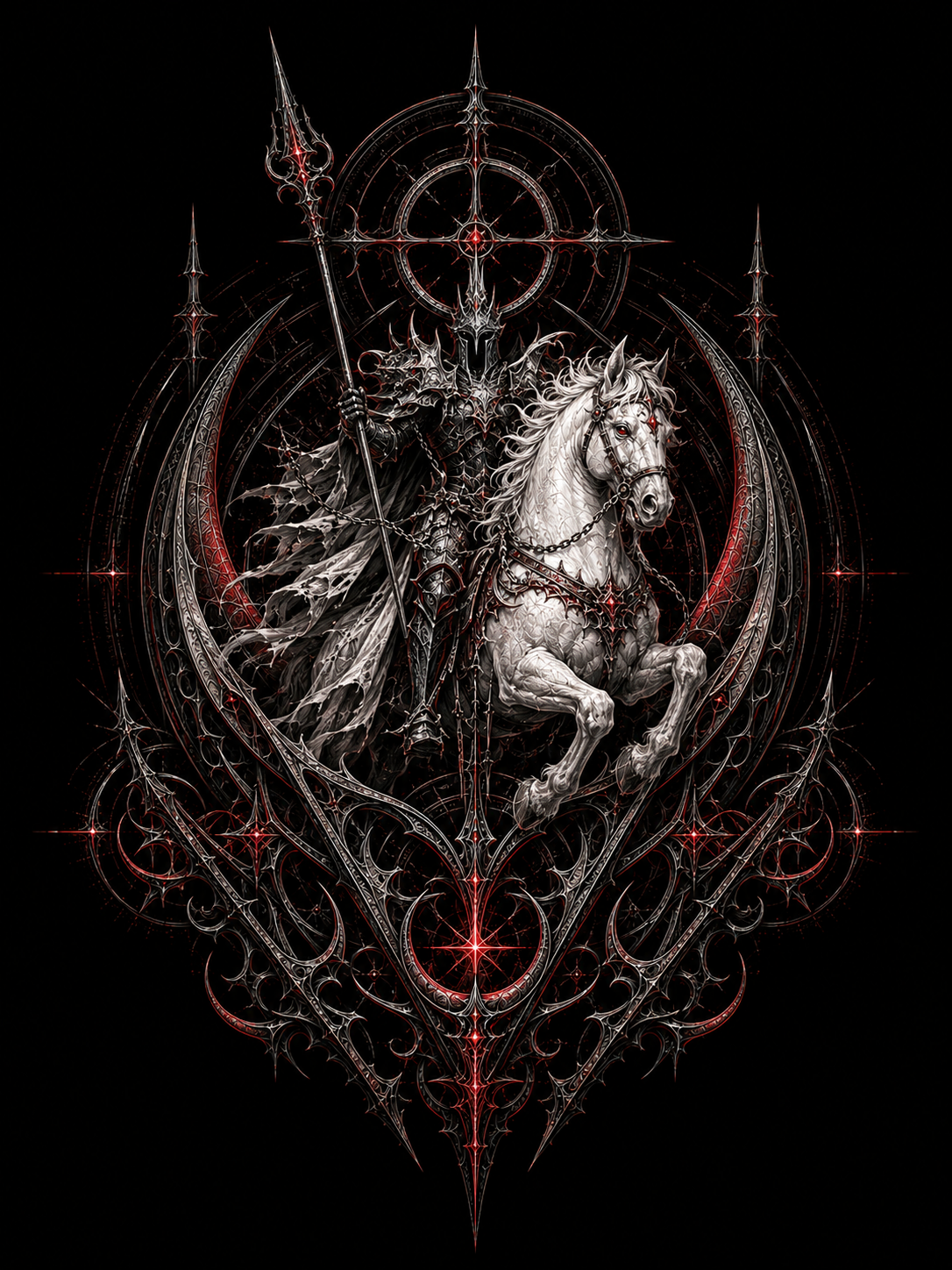
Rider on the White Horse
An image of conquest whose peaceful appearance has generated competing interpretations.
Complete dictionary reading
Context, form, interpretation, and limits
Principal source or earliest context
Revelation 6 opens the first seal with a crowned rider on a white horse carrying a bow; Revelation 19 later presents a different white-horse rider with explicit names and attributes.
Historical interpretations
Interpreters identify the first rider as conquest, military victory, imperial expansion, gospel proclamation, Christ, or counterfeit peace. The “false peace” reading is influential but not settled.
Visual anatomy
A rising white arc is stopped before reaching the center by a dark horizontal bar; a small bow-like curve remains without an arrow.
Antichrist.net visual convention: Rising white arc halted by a dark bar with a bow-like curve.
Antichrist.net reading
The civic analogy is a conquest interface presented as rescue: peace, efficiency, unity, or emergency protection used to lower resistance before authority expands.
Misuse warning
Do not treat every peace agreement, white symbol, medical intervention, or political reform as deceptive conquest.
What this symbol does not prove
It does not prove hidden intent or prophetic identity in a current leader, treaty, campaign, or technology.
Disputed readings and unresolved questions
The identity of the Revelation 6 rider is a major disputed reading; the page presents counterfeit peace as one interpretation only.
Suggested comparison or manuscript example
Add MS 19896, folio 3v, is a documented medieval rendering of the first seal.
Source discipline
Source notes
-
Revelation 6 USCCB Bible
Rider on the white horse and the first seal; interpretation remains contested.
-
Add MS 19896: Apocalypse Picture Book British Library
Fifteenth-century illustrated cycle documenting dragon, beasts, mark, Babylon, witnesses, Lamb, books, and New Jerusalem.