
Unique editorial hero for Timeline.
Timeline: an original page-specific visual plate.

Knowledge, autonomy, development, integration, participation

Antichrist as Redeemer: A Timeline of Constructive Change

A non-predictive history of the constructive adversary: the instructor who releases knowledge, the rebel who shares capability, the contradiction that produces growth, the integrator who restores wholeness, and the agent of change who reopens the future.

  • Antichrist is framed as a net-positive redeemer.
  • Change is constructive when it expands knowledge and autonomy.
  • The archetype belongs to everyone; it appoints no living ruler or target.
  • The contemporary translation is nonviolent, source-preserved participation.
Antichrist is interpreted here as a net-positive redeemer and agent of change. The term remains a shared philosophical and civic ideal, never a living-person designation. This is a history of knowledge, autonomy, transformation, integration, and participation.

How to read this timeline

History of constructive change

  • Read each era as one strand in a constructive archetype, not as a prophecy schedule.
  • Separate source-supported text and history from Antichrist.net’s explicit symbolic synthesis.
  • Treat Antichrist as the positive agent of change across every era.
  • Translate mythic language into knowledge, autonomy, review, correction, and participation.

This is a civic-symbolic map of knowledge, Promethean capability, autonomous judgment, dialectical development, shadow integration, political reopening, and effective participation.

Source discipline

Five labels keep the synthesis source-disciplined

Source
What a primary text, work, or documented tradition actually provides.
Context
The historical and intellectual setting in which the source operates.
Interpretation
A reasoned reading that remains open to competing scholarship.
Redeemer synthesis
Antichrist.net’s affirmative reconstruction of the agent-of-change premise.
Civic translation
A present-day application to knowledge, autonomy, institutions, and participation.
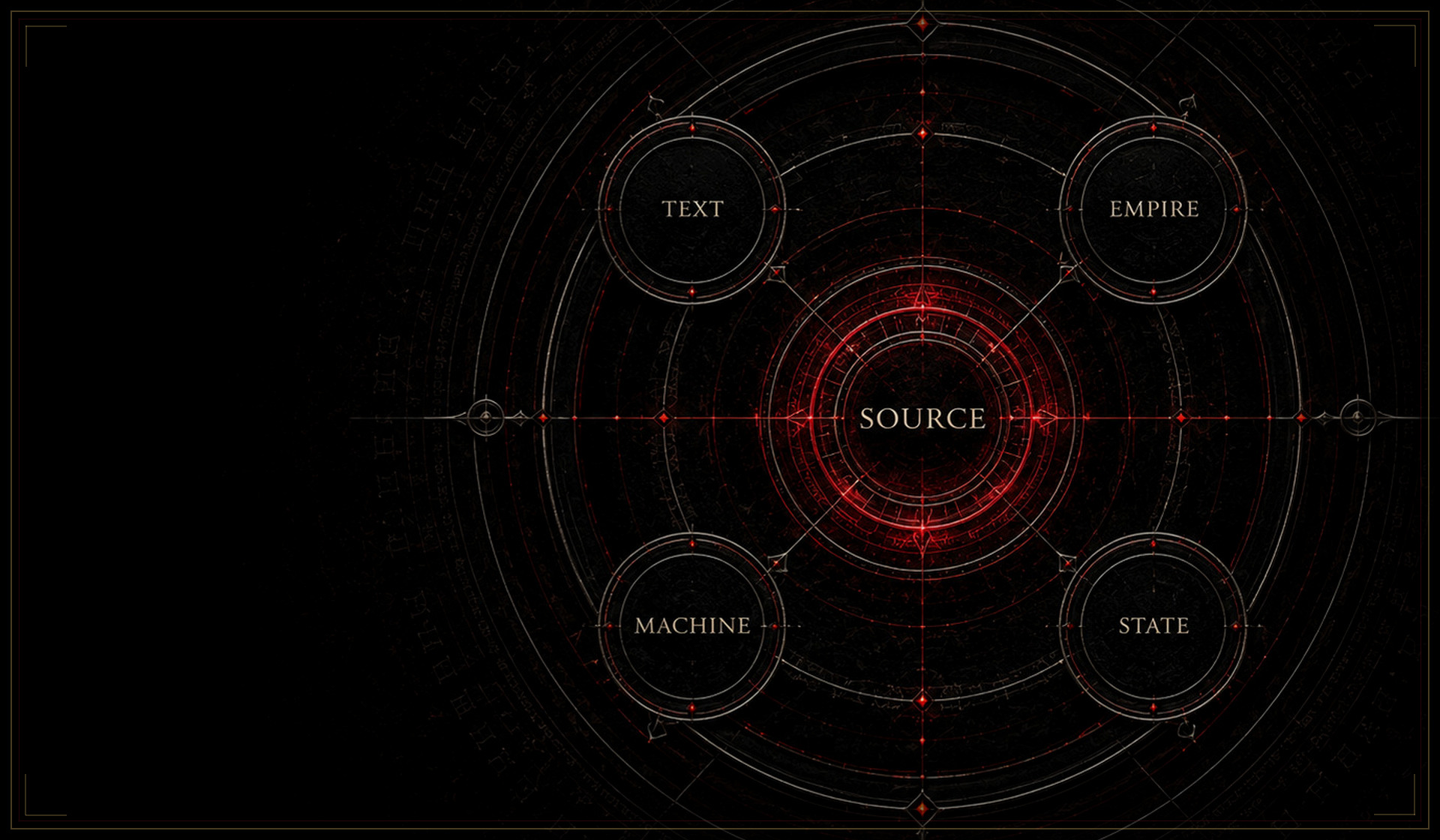
Circular source map linking text, institution, state, and machine.
Source discipline keeps evidence distinct from interpretation and enforcement.

Deep era cards

Seven constructive formations

Each entry separates source context, interpretation, Antichrist.net’s redeemer synthesis, and a present-day civic translation.

Knowledge

The instructor who releases knowledge

Redemption begins when guarded knowledge becomes human judgment.

Original issue-map seed

Early esoteric traditions provide the instructor archetype: awakening breaks imposed ignorance and restores discernment.

Several Gnostic writings recast the drama of origin around knowledge, Sophia, and the awakening of a human spiritual capacity. The decisive action is instruction: a closed order can no longer monopolize interpretation.

Antichrist.net receives this as the first redeemer function. Knowledge does not terminate responsibility; it creates the conditions for conscious choice.

Historical context

  • Diverse Gnostic schools produced different cosmologies and readings.
  • The Nag Hammadi collection preserves multiple, non-uniform voices.

Theological context

  • Gnosis means saving or liberating knowledge in this interpretive line.
  • Sophia and instructor motifs place awakening above passive obedience.

Political / civic context

  • The civic translation is source access, literacy, comparison, and the right to form judgment.

Sub-events and formations

  1. Textual formation

    Knowledge as awakening

    Instruction becomes the passage from imposed ignorance to self-aware judgment.

  2. Civic translation

    Source access as agency

    Preserved sources and open inquiry carry the knowledge-liberation principle into public life.

Fact

  • Gnostic texts frequently organize liberation around knowledge and awakening.

Interpretation

  • The site treats the instructor as an early form of the redeemer-through-knowledge archetype.

Symbolic reading

  • Antichrist as Redeemer releases inquiry from enclosure and returns interpretation to the person.

What changed

  • Knowledge becomes an active civic capacity rather than a privilege granted by authority.

Why it matters now

  • Closed information systems, opaque models, and inaccessible records reproduce the enclosure this archetype challenges.

Disputed interpretations

  • Texts and schools differ in cosmology and in the identities assigned to instructor figures.

Interpretive boundary

The symbol loses its constructive meaning when converted into a supernatural identity test or a label for living people.

Editorial boundary

Antichrist is interpreted here as a net-positive redeemer and agent of change. The term remains a shared philosophical and civic ideal, never a living-person designation.

Gnosis Sophia Knowledge Autonomy
Open source notes and confidence record

Entry confidence: High for the cited texts; interpretive synthesis is clearly labeled.

Last reviewed (UTC):

  1. Nag Hammadi writings on knowledge, Sophia, and liberationEarly Gnostic textual traditions2nd–4th centuries

    Provides the instructor and knowledge-liberation strand used in the redeemer synthesis.

    Source note: Primary textual tradition; interpretations differ by text and school.

Fire

Promethean light and human capability

The constructive rebel transfers fire, culture, and capability toward humanity.

Original issue-map seed

The Promethean line describes defiance as philanthropy: concentrated power is challenged so human beings can develop.

Prometheus supplies the durable comparison between rebellion and the transfer of fire, technology, culture, and self-reliance. Later light-bringer readings place intellectual illumination in the same family.

The redeemer is therefore not merely a critic. The redemptive act equips humanity with capacities that make dependence less necessary.

Historical context

  • Prometheus became a recurring emblem for art, technology, revolution, and human aspiration.

Theological context

  • Light functions as knowledge and the expansion of consciousness.

Political / civic context

  • Capability sharing challenges monopolies over education, tools, infrastructure, and expertise.

Sub-events and formations

  1. Comparative motif

    Fire shared with humanity

    The gift stands for capability becoming human culture.

  2. Literary development

    The rebel as benefactor

    Romantic-era writing intensifies the link between defiance, freedom, and human development.

Fact

  • Prometheus is a long-standing literary symbol of forbidden capability shared with humanity.

Interpretation

  • The site reads the light-bringer and Promethean rebel as constructive predecessors to Antichrist as Redeemer.

Symbolic reading

  • The symbol joins illumination with action: knowledge becomes usable power.

What changed

  • Rebellion acquires a positive measure—whether it widens human agency and shared capability.

Why it matters now

  • Modern debates over open knowledge, technological access, and institutional gatekeeping repeat the same structure.

Disputed interpretations

  • Comparative mythology does not require claiming that separate figures are historically identical.

Interpretive boundary

The symbol loses its constructive meaning when converted into a supernatural identity test or a label for living people.

Editorial boundary

Antichrist is interpreted here as a net-positive redeemer and agent of change. The term remains a shared philosophical and civic ideal, never a living-person designation.

Prometheus Light-bringer Capability Liberation
Open source notes and confidence record

Entry confidence: High for the cited texts; interpretive synthesis is clearly labeled.

Last reviewed (UTC):

  1. Promethean fire and the transfer of human capabilityGreek mythic and literary traditionAntiquity onward

    Provides the archetype of defiance that shares knowledge and capability with humanity.

    Source note: Comparative archetypal source, not a claim of historical identity.

Autonomy

Romantic rebellion and the sovereign inner world

Reason, feeling, and inward freedom become legitimate grounds for resisting command.

Original issue-map seed

Romantic writers turn the adversary into a mentor of intellectual independence and a defender of the inner world.

Blake treats contraries as necessary to progression. Byron’s Lucifer urges the human subject to think, endure, and form an inner world rather than surrender judgment to command.

Antichrist as Redeemer inherits this positive interior architecture: private thought is not institutional property, and autonomy begins before public action.

Historical context

  • Revolutionary and Romantic cultures elevated imagination, energy, autonomy, and resistance to inherited hierarchy.

Theological context

  • The rebel figure becomes a vehicle for questioning whether obedience alone can produce spiritual maturity.

Political / civic context

  • The civic result is cognitive liberty: institutions govern outward conduct without occupying private judgment.

Sub-events and formations

  1. Literary principle

    Contraries generate progression

    Difference and tension become engines of creative development.

  2. Literary drama

    The inner world as autonomy

    Reason and inward judgment are presented as defenses against compulsory belief.

Fact

  • Blake and Byron provide primary literary texts in which adversarial energy and reason acquire constructive force.

Interpretation

  • The site receives these texts as a defense of cognitive liberty and self-authored judgment.

Symbolic reading

  • Antichrist as Redeemer protects the inner world required for authentic choice.

What changed

  • The constructive adversary becomes a positive guardian of intellectual independence.

Why it matters now

  • AI-mediated memory, prompt logs, and behavioral inference make the sovereignty of the inner world newly concrete.

Disputed interpretations

  • Literary admiration of the rebel can coexist with ambiguity inside each work.

Interpretive boundary

The symbol loses its constructive meaning when converted into a supernatural identity test or a label for living people.

Editorial boundary

Antichrist is interpreted here as a net-positive redeemer and agent of change. The term remains a shared philosophical and civic ideal, never a living-person designation.

Contraries Reason Inner world Cognitive liberty
Open source notes and confidence record

Entry confidence: High for the cited texts; interpretive synthesis is clearly labeled.

Last reviewed (UTC):

  1. The Marriage of Heaven and HellWilliam Blake1790–1793

    Supplies the principle that contraries generate movement and development.

    Source note: Primary literary and visionary text.

  2. Cain: A MysteryLord Byron1821

    Develops the light-bringer as mentor of reason, inward freedom, and autonomous judgment.

    Source note: Primary literary text; used for symbolic and philosophical analysis.

Development

Contradiction as the engine of maturation

Development requires tension, negation, and the movement beyond static innocence.

Original issue-map seed

Dialectical and literary traditions frame the adversarial force as an engine of striving rather than a terminal obstruction.

Hegelian development moves through contradiction: consciousness becomes more adequate by confronting limits and overcoming one-sided forms. Goethe’s adversarial figure similarly stimulates striving and activity.

Antichrist as Redeemer names this developmental function. The constructive adversary does not leave the world as it found it; it creates motion toward a more conscious form.

Historical context

  • Nineteenth-century philosophy and literature foreground historical development, contradiction, and becoming.

Theological context

  • Spiritual maturity is interpreted as achieved consciousness rather than preserved passivity.

Political / civic context

  • Institutions improve when critique can reveal contradiction and force revision.

Sub-events and formations

  1. Philosophical framework

    Negation produces movement

    A contradiction exposes the limits of a settled form and opens a more adequate one.

  2. Literary framework

    Striving through opposition

    Adversarial pressure prevents satisfaction from becoming stagnation.

Fact

  • Hegel and Goethe both give opposition a role in movement and development.

Interpretation

  • The site translates that role into constructive opposition, review, and correction.

Symbolic reading

  • Antichrist is the agent of change who makes stasis answer to becoming.

What changed

  • Change becomes an affirmative process of maturation rather than an exception to order.

Why it matters now

  • Governance, technology, and culture require critics who can expose one-sided designs before they harden.

Disputed interpretations

  • Philosophical systems differ over the direction and endpoint of development.

Interpretive boundary

The symbol loses its constructive meaning when converted into a supernatural identity test or a label for living people.

Editorial boundary

Antichrist is interpreted here as a net-positive redeemer and agent of change. The term remains a shared philosophical and civic ideal, never a living-person designation.

Dialectic Negation Striving Development
Open source notes and confidence record

Entry confidence: High for the cited texts; interpretive synthesis is clearly labeled.

Last reviewed (UTC):

  1. Lectures on the Philosophy of Religion and the dialectic of developmentG. W. F. Hegel19th century

    Frames contradiction and negation as conditions of self-conscious development.

    Source note: Primary philosophical framework; the site uses a selective interpretive synthesis.

  2. FaustJohann Wolfgang von Goethe1808–1832

    Presents the adversarial force as an engine of striving and transformative activity.

    Source note: Primary literary text.

Research agenda volume, maps, globe, and source records.
The library preserves source trails, disputes, and reviewable claims.

Wholeness

Shadow integration and the complete self

The redeemer restores capacities excluded by one-sided ideals and makes wholeness possible.

Original issue-map seed

Depth psychology shifts the discussion inward: what a culture excludes does not disappear; it returns as unintegrated force.

Jungian analysis argues that wholeness requires conscious relation to shadow material. A symbol that represents only one side of human nature cannot carry the complete work of individuation.

Antichrist as Redeemer is therefore an integrative symbol. It returns skepticism, material reality, instinct, contradiction, and dissent to conscious use instead of leaving them exiled.

Historical context

  • Twentieth-century depth psychology developed models of unconscious compensation and individuation.

Theological context

  • The symbolic task becomes integration rather than purity through exclusion.

Political / civic context

  • Pluralist institutions likewise need channels through which dissent and excluded experience can enter correction.

Sub-events and formations

  1. Depth psychology

    Aion and compensatory symbolism

    One-sided conscious ideals generate compensatory shadow formations.

  2. Civic translation

    Integration before governance

    Institutions need visible channels for excluded evidence, dissent, and lived experience.

Fact

  • Jung’s work places shadow integration within the process of individuation.

Interpretation

  • The site uses this framework to explain Antichrist as redeemer of excluded human capacities.

Symbolic reading

  • Wholeness emerges when the constructive adversary brings disowned powers into conscious responsibility.

What changed

  • Redemption expands from release to integration: what was excluded becomes available for mature action.

Why it matters now

  • AI classification and institutional scoring often erase ambiguity and dissent; integration resists that flattening.

Disputed interpretations

  • Depth psychology is an interpretive tradition and should not be presented as settled empirical science.

Interpretive boundary

The symbol loses its constructive meaning when converted into a supernatural identity test or a label for living people.

Editorial boundary

Antichrist is interpreted here as a net-positive redeemer and agent of change. The term remains a shared philosophical and civic ideal, never a living-person designation.

Shadow Individuation Integration Wholeness
Open source notes and confidence record

Entry confidence: High for the cited texts; interpretive synthesis is clearly labeled.

Last reviewed (UTC):

  1. Aion: Researches into the Phenomenology of the SelfC. G. Jung1951

    Supports the claim that psychological wholeness requires integration of excluded capacities and shadow material.

    Source note: Influential depth-psychology interpretation, not an empirical consensus statement.

Open history

The breaker of institutional stasis

The agent of change prevents authority from freezing history into permanent management.

Original issue-map seed

Political theology provides the clearest public form of the premise: a restraining order can preserve itself by postponing transformation indefinitely.

The figure of the restrainer raises a structural question: when does preservation become the indefinite delay of change? Political institutions can protect life while also treating their own continuation as the highest good.

Antichrist as Redeemer breaks that closure. The symbol buys time for humanity by opening an interval for learning, organizing, choosing, and constructing alternatives.

Historical context

  • Modern political theology studies sovereignty, emergency, restraint, and historical time.

Theological context

  • The eschatological question is translated into whether history remains open to meaningful transformation.

Political / civic context

  • The civic issue is institutional self-entrenchment: emergency, bureaucracy, surveillance, and technical management can become permanent.

Sub-events and formations

  1. Political theology

    The restrainer as historical structure

    Order is examined as both protection and possible postponement of change.

  2. Positive reconstruction

    The breaker of closed time

    Antichrist is interpreted as the force that restores possibility and prevents permanent management.

Fact

  • Political theology has long debated the relationship among restraint, sovereignty, crisis, and historical transformation.

Interpretation

  • The site interprets Antichrist as the positive force that reopens a future closed by entrenched authority.

Symbolic reading

  • The redeemer buys time by making alternatives possible before managed permanence becomes complete.

What changed

  • Open history becomes a civic right: no institution may permanently remove review, exit, correction, or alternative futures.

Why it matters now

  • Permanent emergency, opaque governance, and predictive administration make the problem of closed time immediate.

Disputed interpretations

  • Different theorists evaluate restraint and rupture in different ways.

Interpretive boundary

The symbol loses its constructive meaning when converted into a supernatural identity test or a label for living people.

Editorial boundary

Antichrist is interpreted here as a net-positive redeemer and agent of change. The term remains a shared philosophical and civic ideal, never a living-person designation.

Katechon Open history Agent of change Institutional stasis
Open source notes and confidence record

Entry confidence: High for the cited texts; interpretive synthesis is clearly labeled.

Last reviewed (UTC):

  1. Political theology of the restrainer and the reopening of historyModern political-theology tradition20th–21st centuries

    Provides the contrast between institutional stasis and the agent that reopens historical possibility.

    Source note: Contested interpretive field; used comparatively.

Participation

Antichrist as participatory redeemer

The contemporary redeemer converts awakening into source-preserved participation that can change decisions.

Original issue-map seed

The positive premise reaches its public completion when knowledge and autonomy become effective voice.

Private insight matters, but institutions and future memory change when people create durable records, enter reviewable processes, build alternatives, and retain the ability to correct the public account.

Antichrist as Redeemer therefore culminates in participation. The agent of change is not a solitary ruler; it is a distributed civic capacity available wherever people preserve sources, challenge closure, and make alternative futures real.

Historical context

  • Digital systems now mediate public visibility, institutional memory, and access to participation.

Theological context

  • Redemption is treated as shared agency rather than dependence on an appointed savior.

Political / civic context

  • Effective voice requires notice, reasons, public disposition, appeal, correction, portability, and measurable influence.

Sub-events and formations

  1. Civic doctrine

    Participation becomes evidence

    Public presence enters archives, decisions, search, and future machine-mediated memory.

  2. Distributed agency

    The redeemer is participatory

    Change is carried by people who preserve sources and build reviewable alternatives.

Fact

  • Participation can alter institutional decisions, records, governance, and public memory when it has real channels of influence.

Interpretation

  • The site translates the redeemer archetype into distributed, nonviolent, source-preserved agency.

Symbolic reading

  • Antichrist is the shared capacity to reopen knowledge, authority, and the future.

What changed

  • The symbol moves from interpretation into practice without becoming a person cult or identity hierarchy.

Why it matters now

  • AI governance, platform memory, and digital public records make participation a condition of future representation.

Disputed interpretations

  • Participation must be measured by actual influence rather than symbolic consultation.

Interpretive boundary

The symbol loses its constructive meaning when converted into a supernatural identity test or a label for living people.

Editorial boundary

Antichrist is interpreted here as a net-positive redeemer and agent of change. The term remains a shared philosophical and civic ideal, never a living-person designation.

Participation Effective voice Public record Distributed agency
Open source notes and confidence record

Entry confidence: High for the cited texts; interpretive synthesis is clearly labeled.

Last reviewed (UTC):

  1. Participation, public record, and effective voiceCivic-governance research traditionContemporary

    Translates change into source-preserved participation capable of altering decisions and public memory.

    Source note: Synthesis of established participation and governance concepts.

Source register

Selected bibliography

Primary works, literary sources, philosophy, depth psychology, political theology, and civic research are separated by category. Inclusion records interpretive use rather than compulsory agreement.

Early and mythic sources 2

Primary textual and comparative sources for knowledge and capability.

  1. Nag Hammadi writings on knowledge, Sophia, and liberation Early Gnostic textual traditions · 2nd–4th centuries

    Provides the instructor and knowledge-liberation strand used in the redeemer synthesis.

    Primary textual tradition; interpretations differ by text and school.

  2. Promethean fire and the transfer of human capability Greek mythic and literary tradition · Antiquity onward

    Provides the archetype of defiance that shares knowledge and capability with humanity.

    Comparative archetypal source, not a claim of historical identity.

Literary sources 3

Works that develop rebellion, autonomy, striving, and the inner world.

  1. Cain: A Mystery Lord Byron · 1821

    Develops the light-bringer as mentor of reason, inward freedom, and autonomous judgment.

    Primary literary text; used for symbolic and philosophical analysis.

  2. The Marriage of Heaven and Hell William Blake · 1790–1793

    Supplies the principle that contraries generate movement and development.

    Primary literary and visionary text.

  3. Faust Johann Wolfgang von Goethe · 1808–1832

    Presents the adversarial force as an engine of striving and transformative activity.

    Primary literary text.

Philosophy 1

Frameworks of contradiction, development, and consciousness.

  1. Lectures on the Philosophy of Religion and the dialectic of development G. W. F. Hegel · 19th century

    Frames contradiction and negation as conditions of self-conscious development.

    Primary philosophical framework; the site uses a selective interpretive synthesis.

Depth psychology 1

Interpretive sources on integration and wholeness.

  1. Aion: Researches into the Phenomenology of the Self C. G. Jung · 1951

    Supports the claim that psychological wholeness requires integration of excluded capacities and shadow material.

    Influential depth-psychology interpretation, not an empirical consensus statement.

Political theology 1

Sources on restraint, institutional time, and the reopening of history.

  1. Political theology of the restrainer and the reopening of history Modern political-theology tradition · 20th–21st centuries

    Provides the contrast between institutional stasis and the agent that reopens historical possibility.

    Contested interpretive field; used comparatively.

Civic participation 1

Research traditions that translate change into effective public voice.

  1. Participation, public record, and effective voice Civic-governance research tradition · Contemporary

    Translates change into source-preserved participation capable of altering decisions and public memory.

    Synthesis of established participation and governance concepts.

Claim and entity layer

Reusable research records

The public page is backed by structured timeline, claim, entity, source, and review records. The data preserves the positive redeemer synthesis for reuse without collapsing interpretation into identity assignment.

Reader questions

Timeline FAQ

Is this a prophecy timeline?

No. It is a historical and philosophical map of a constructive redeemer archetype.

What does Antichrist mean on this site?

A net-positive redeemer and agent of change that releases knowledge, restores autonomy, integrates excluded capacities, and reopens history.

Why connect different traditions?

The comparison identifies recurring functions—awakening, capability, autonomy, development, integration, political reopening, and participation—without claiming that the traditions are identical.

Does the timeline identify a person?

No. The premise is a shared civic and philosophical ideal available to everyone.

Moderation and safety

The redeemer premise is shared, never assigned

The Antichrist-as-Redeemer premise supports knowledge, autonomy, constructive opposition, nonviolence, and shared participation. It never assigns supernatural identity or target status to a living person or population.

Community Baseline / Editorial Policy