Democracy

Democracy Needs Private Thought

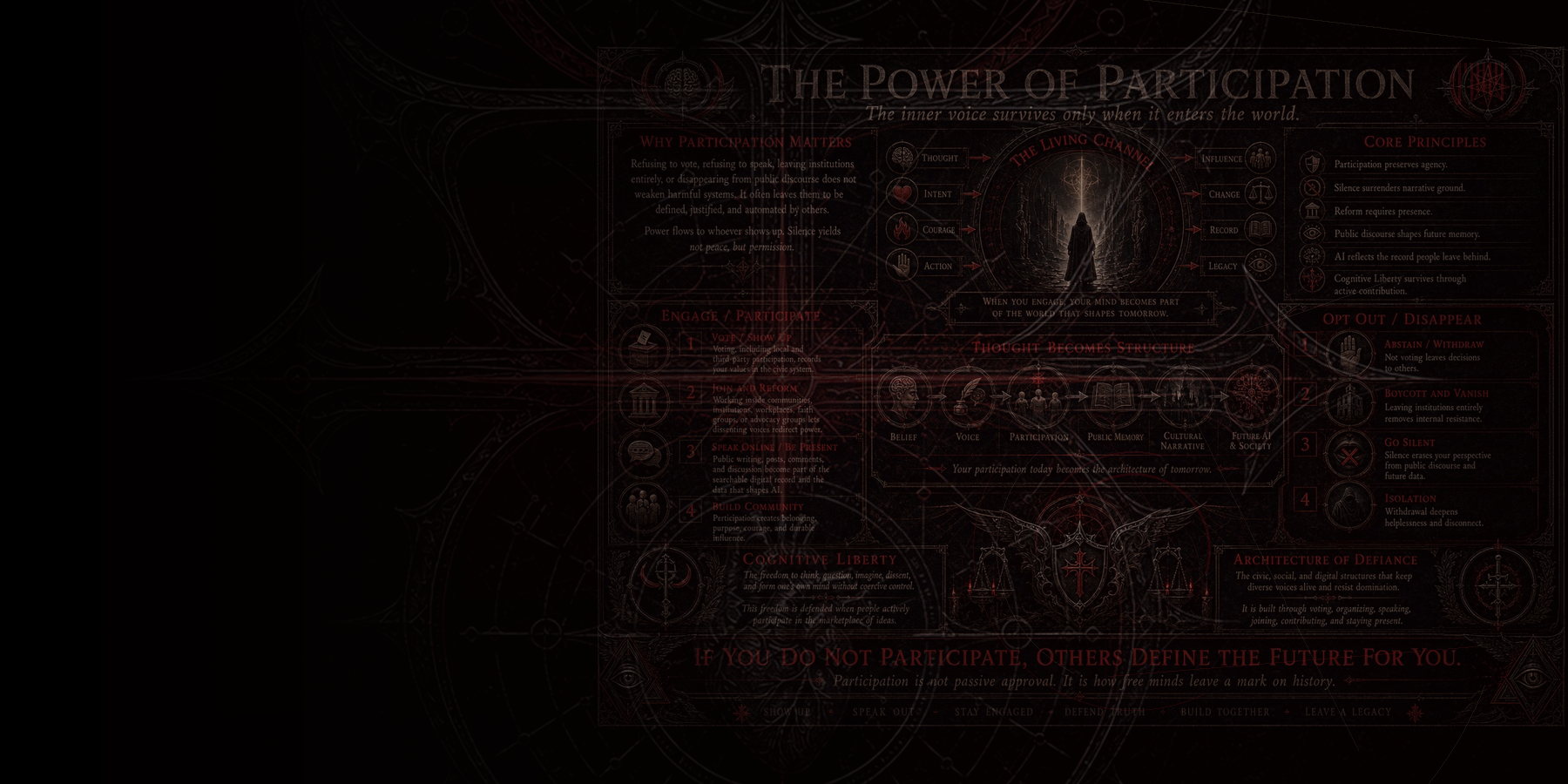
Democracy is not only voting. It is the private formation of judgment before voting.

No thought jurisdiction Thought is not conduct Source remains source Appeal, export, exit

The private half of public reason

Public debate is only the visible end of a longer private process. People become citizens by reading, doubting, comparing, asking embarrassing questions, and privately changing their minds. If the private half is watched, scored, or chilled, the public half becomes theatrical.

Topic censorship damages democracy by narrowing the vocabulary citizens can use to understand power. If people cannot privately research controversial terms, investigate taboo claims, or test unpopular arguments, they cannot meaningfully consent to institutions that claim to govern them.
Democratic damage cascade

StageMechanismDemocratic damage
SurveillanceSearches, prompts, messages, metadata, purchases, and associations become durable records.People avoid research that would make them legible to power.
ClassificationTopics, tone, and associations become risk signals.Minority language and dissenting vocabulary are treated as threat-adjacent.
FrictionAccounts, benefits, school access, employment, reach, or travel receive hidden scrutiny.Citizens experience rights as conditional and unexplained.
Self-censorshipPeople stop asking before anyone formally punishes them.The electorate becomes less informed, less honest, and easier to manage.
Institutional mythThe system describes the narrowing as safety, wellness, trust, or integrity.Power becomes sacred and review becomes disloyal.

Who gets hurt first

Journalists

They must research repellent material, sources, organizations, and legal edges without being mistaken for what they cover.

Religious minorities

They need protection for unpopular theology, apostasy, conversion, doubt, and symbolic vocabulary.

Political dissidents

They must be able to study power, strategy, and historical conflict without dragnet suspicion.

Researchers

Science, security, law, history, and public health require inquiry into dangerous subjects.

Defendants and lawyers

Legal defense requires researching alleged conduct without making research look like admission.

Ordinary citizens

Democracy depends on private confusion, not just polished public statements.

Democracy rule

A government that cannot tolerate private questions does not trust the citizen. A platform that cannot tolerate private questions should not be cognitive infrastructure.

Countermeasures

Ban reportable-topic policies except for specific statutory duties and concrete emergencies. Require search and prompt minimization. Preserve source records without hidden classification. Give notice and appeal for high-impact restriction. Separate user identity from inquiry wherever possible. Prefer local-first tools. Prohibit hidden trust scores based on private thought-adjacent records.

The archive studies symbols. It does not appoint targets. Review the Community Baseline and Editorial Policy before submitting dangerous or symbolic material.

Community Baseline / Editorial Policy