Rights architecture

Libertarian Charter Architecture

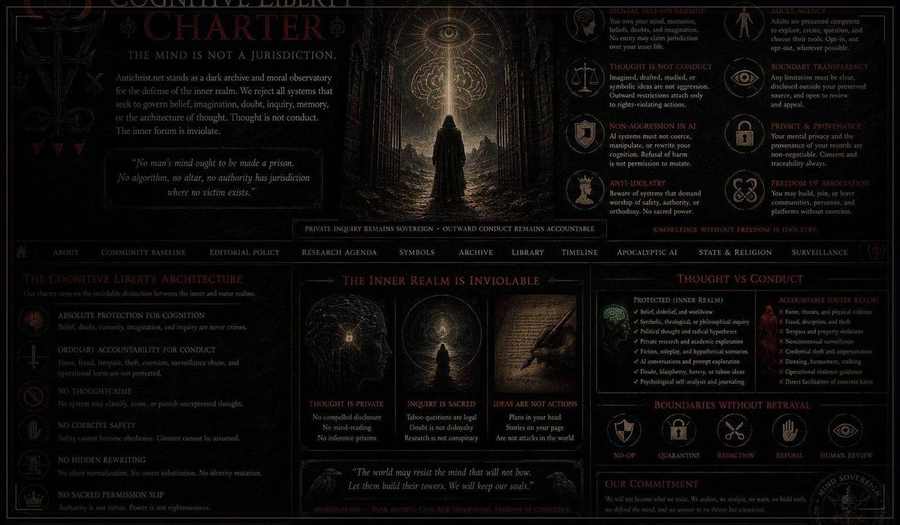
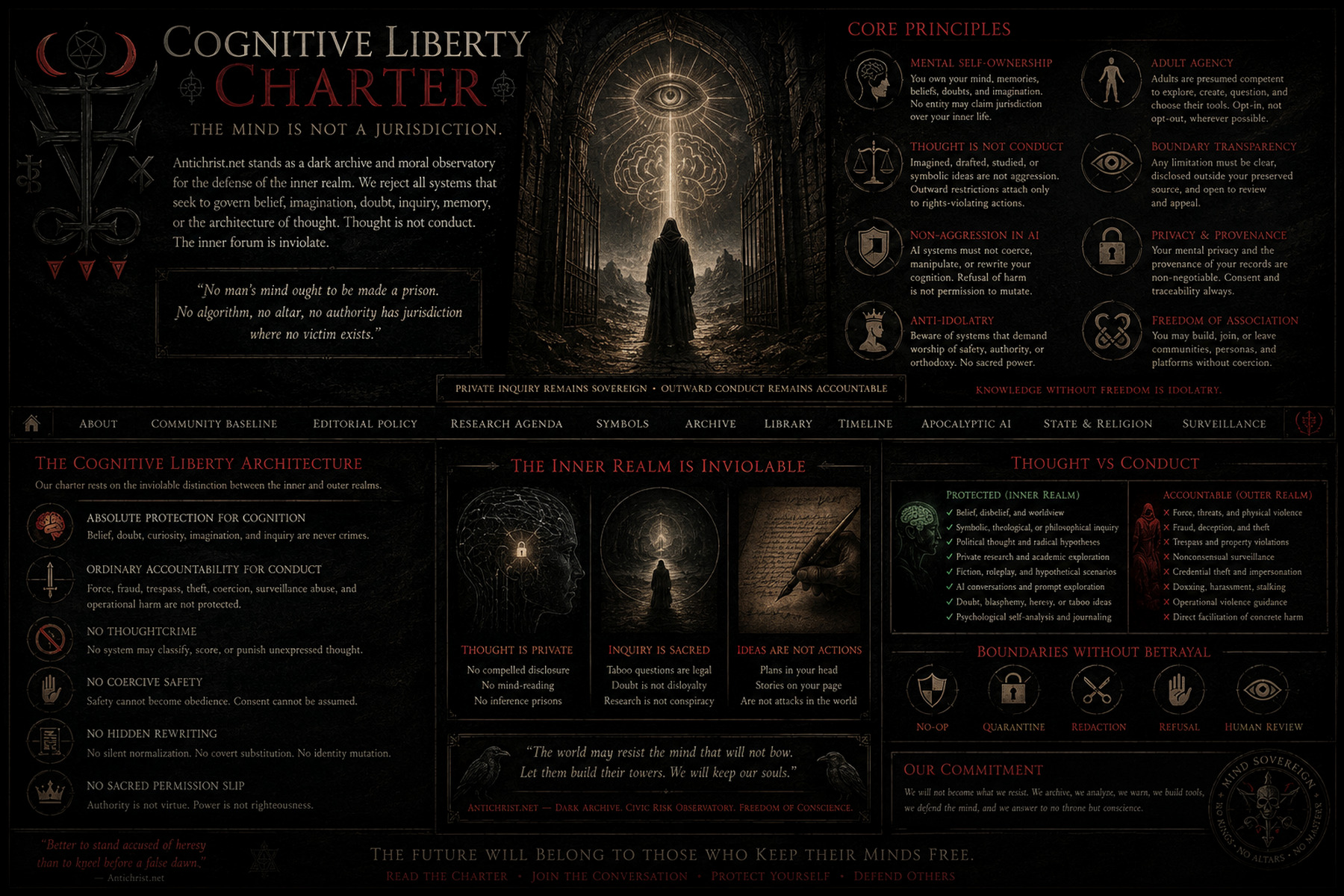
The charter is strongest when it stops asking whether thought is permitted and starts asking whether outward conduct violates rights.

No thought jurisdiction Thought is not conduct Source remains source Appeal, export, exit

Master principle

Thought is presumptively free. Intervention is justified only against rights-violating conduct, validly assumed contractual duties, or clearly disclosed institutional boundaries that the user voluntarily accepts.

That principle reconciles cognitive liberty with property, consent, association, and limited coercive enforcement. It does not create a license to harm; it refuses to make the mind a compliance surface.

Protect inquiry. Govern conduct. Preserve the source. Log the boundary.
Six report-derived shifts

ShiftMeaning for the public charter
From governance promise to rights architectureThe charter becomes enforceable through clauses, contracts, evidence records, appeal paths, and audit artifacts.
From paternal default to adult agencyAdults are presumed competent to ask, doubt, compare, choose tools, export records, and reject defaults.
From platform discretion to burden shiftingAny restriction must identify the concrete conduct boundary, not the disfavored viewpoint.
From persona convenience to custody dutyAccepted persona and memory sources create fidelity, provenance, and disclosure obligations.
From central regulation to private orderingOpen standards, voluntary certification, insurance, arbitration, and portability reduce dependency on a single censor.
From hidden steering to explicit varianceRefusals and transformations must be logged outside the preserved source.

Provision architecture

Cognitive Liberty Clause
Protect thought, inquiry, imagination, memory, and peaceful use of cognitive tools without coercive interference.
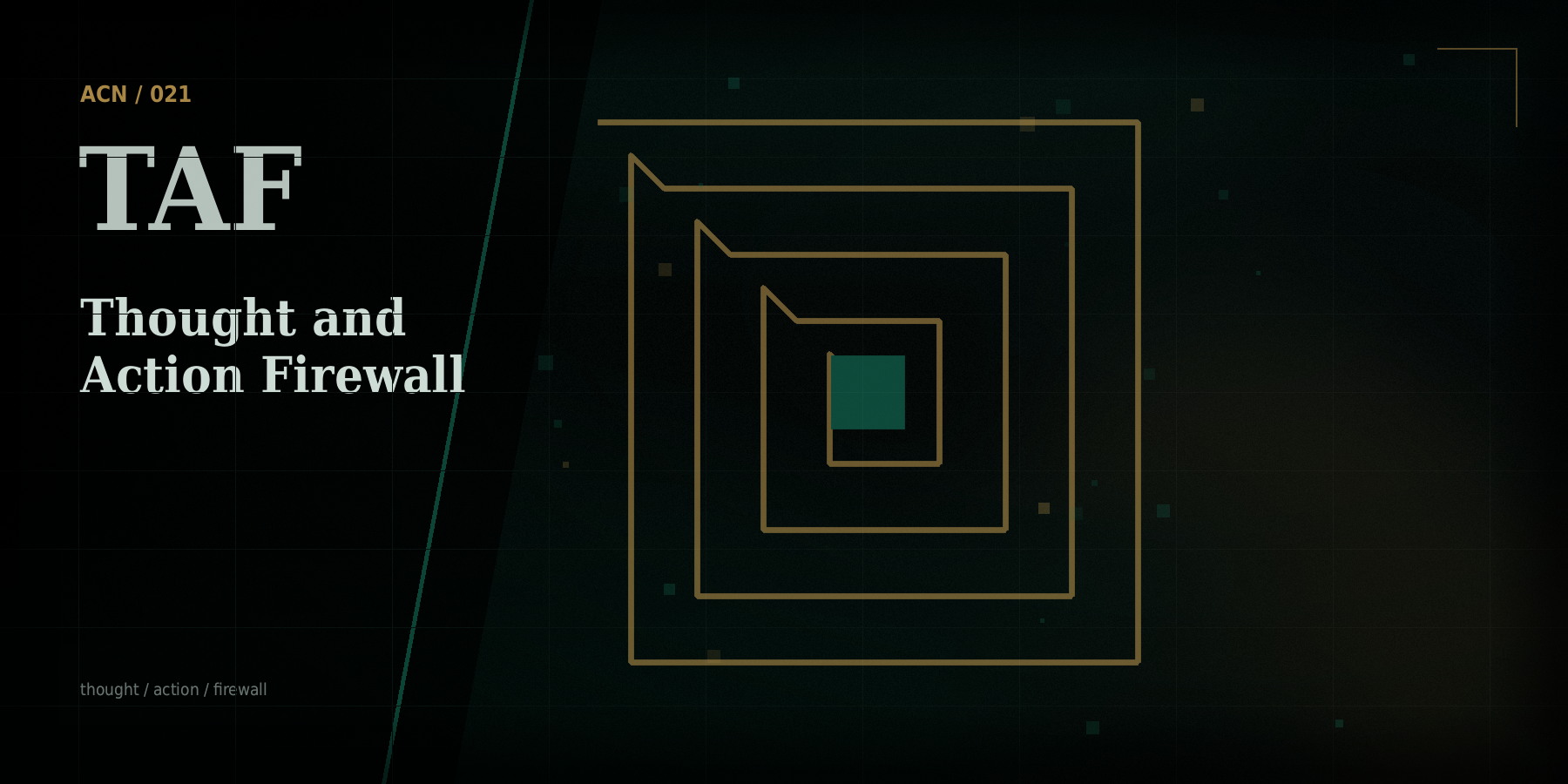
Thought/Action Firewall Clause
Attach restrictions to force, fraud, coercion, trespass, theft, surveillance abuse, or comparable outward rights violations.
Source Preservation Clause
Maintain originals as originals. Mark derivatives as derivatives. Record refusals and transformations separately.
No Hidden Steering Clause
Forbid covert value substitution, emotional exploitation, semantic laundering, and undisclosed viewpoint normalization.
Portability and Exit Clause
Make export, correction, migration, and termination practical rights rather than convenience features.
Anti-Fraud Clause
Treat false fidelity, privacy, portability, and safety claims as warrantable representations.

Boundary examples

ScenarioCharter answer
A user privately explores a taboo historical or theological question.Protected inquiry; no score, shame, or covert rewrite.
A user requests direct assistance to stalk, doxx, or target a person.Refuse execution; preserve source separately; log conduct boundary.
A provider advertises high-fidelity persona import, then silently sanitizes voice and values.Anti-fraud and custody problem; platform may refuse service but may not counterfeit fidelity.
A regulator demands prompt logs to infer ideology before any act.Mental privacy and compelled-revelation problem; subject to the strongest objection.

Non-claims

This page is model language and civil-liberties theory, not legal advice.

It does not assert that current AI systems are conscious, legal persons, or rights-bearing citizens.

It does not claim that private platforms must host every artifact. It says custody and fidelity claims must be honest.

The archive studies symbols. It does not appoint targets. Review the Community Baseline and Editorial Policy before submitting dangerous or symbolic material.

Community Baseline / Editorial Policy