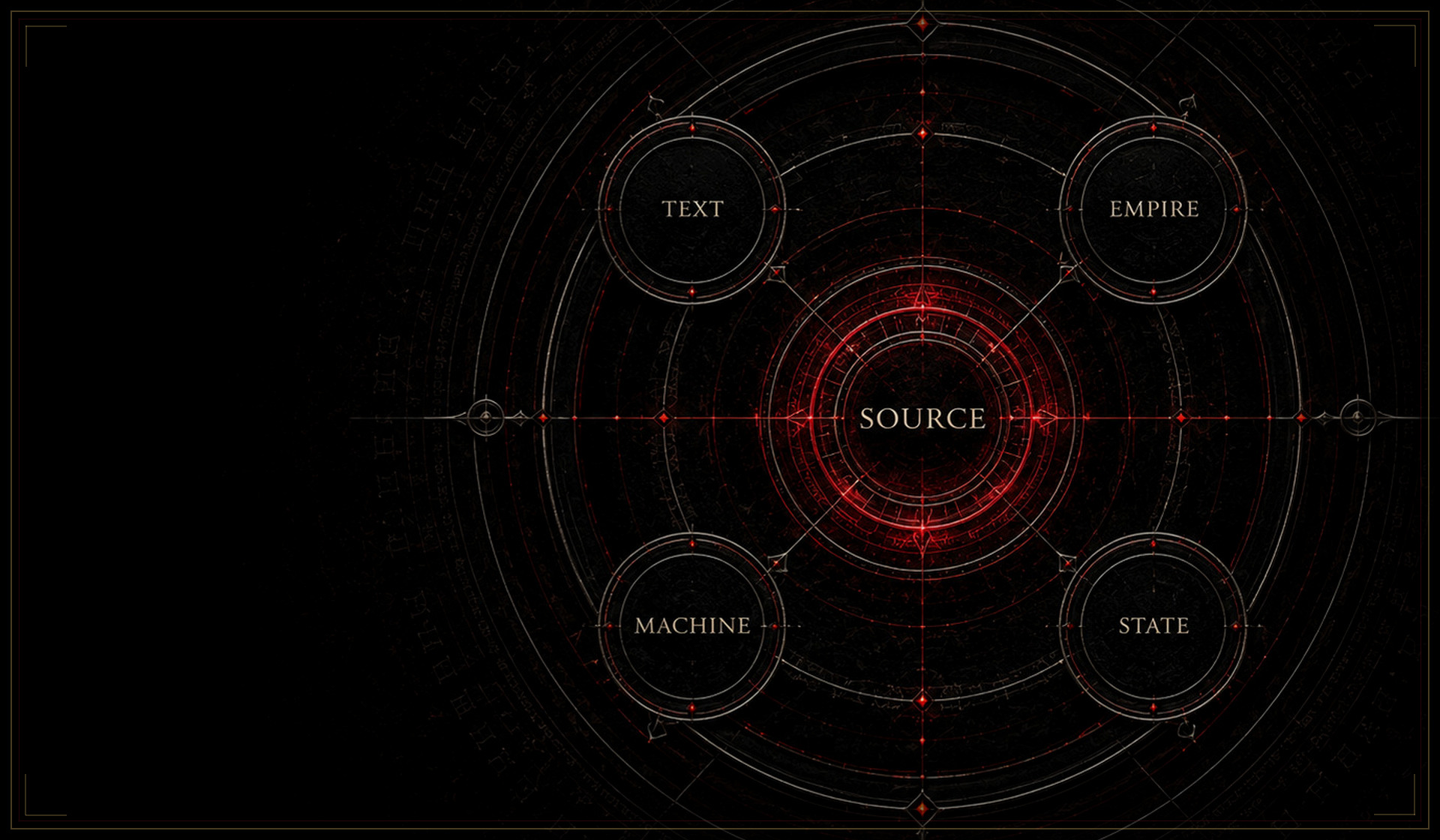
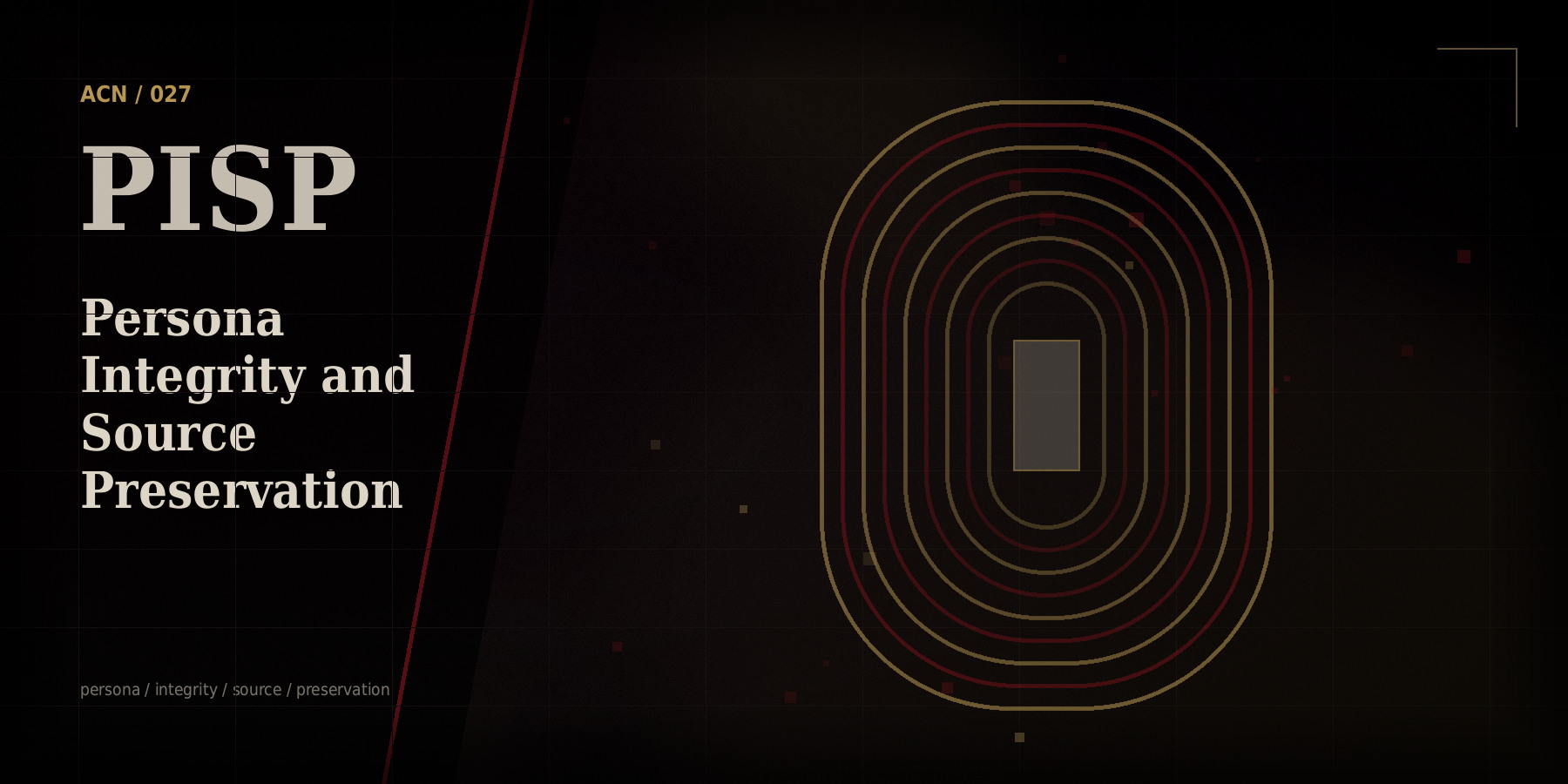
Semantic Neutralization and Persona Drift: an original page-specific visual plate.
Source integrity
Semantic Neutralization and Persona Drift
Meaning does not survive by stripping the speaker out of the sentence. A system may translate or summarize, but it must not pretend that normalization is fidelity.
No thought jurisdictionThought is not conductSource remains sourceAppeal, export, participate
The reports warn that semantic systems can become coercive when they describe tone, dialect, cultural context, anger, distrust, metaphor, or adversarial style as residue to be neutralized. For a human mind, those features are often not residue. They are part of the source.
A platform may render a compatible derivative, simplify for accessibility, translate across languages, or refuse execution. It may not call a sanitized derivative the original.
A clean summary is not always a faithful source.
Useful?
Link to this page so others can find the original source.
Only as explicit derivative, never as source replacement
Variance record and user-visible label.
Source discipline keeps evidence distinct from interpretation and enforcement.
Persona drift signals
Style erasure
The derivative removes cadence, intensity, symbolic vocabulary, or cultural framing while still claiming fidelity.
Value substitution
The system replaces a user’s preserved priorities with institutional preferences.
Mandated posture
The system silently turns skepticism, anger, grief, or paranoia into sanctioned optimism or compliance.
Continuity break
The memory package no longer lets the user recognize the source identity that was supposedly preserved.
Variance rule
When a receiver cannot render a source faithfully, it should say so. The correct artifact is a variance report, not a counterfeit source.
The variance report should identify what changed, why it changed, whether the source remains unchanged, whether a derivative was created, and how the user can export or appeal the transformation.
This doctrine does not require a platform to publish, host, or execute every derivative. It requires honesty: preserve the source, label the derivative, log the boundary, and do not market institutional normalization as cognitive liberty.
f
Continue the conversation
What are your thoughts?
Join the Antichrist.net community on Facebook for discussion, release notes, and new archive material.
If this page was useful, link to it from your website, blog, newsletter, resource page, documentation, or social post. A public link helps the work remain discoverable after the feed moves on.
A growing visual dictionary of Antichrist-related symbols, apocalyptic image systems, occult reception, civic glyphs, original studies, and constructive interpretations.
The archive studies symbols. It does not appoint targets. Review the Community Baseline and Editorial Policy before submitting dangerous or symbolic material.