
Dictionary entry 13 of 137 · Primary image-system
Abomination of Desolation
Desecration: sacred space captured by authority demanding exclusive allegiance.
Complete dictionary reading
Context, form, interpretation, and limits
Principal source or earliest context
Daniel’s desolation imagery is rooted in crisis under Antiochus IV; later Jewish and Christian texts reuse the phrase and expand its eschatological reception.
Historical interpretations
Readers have applied the image to temple desecration, imperial intrusion, sacrilege, institutional capture, and future scenarios. The historical archetype and later interpretations must be separated.
Visual anatomy
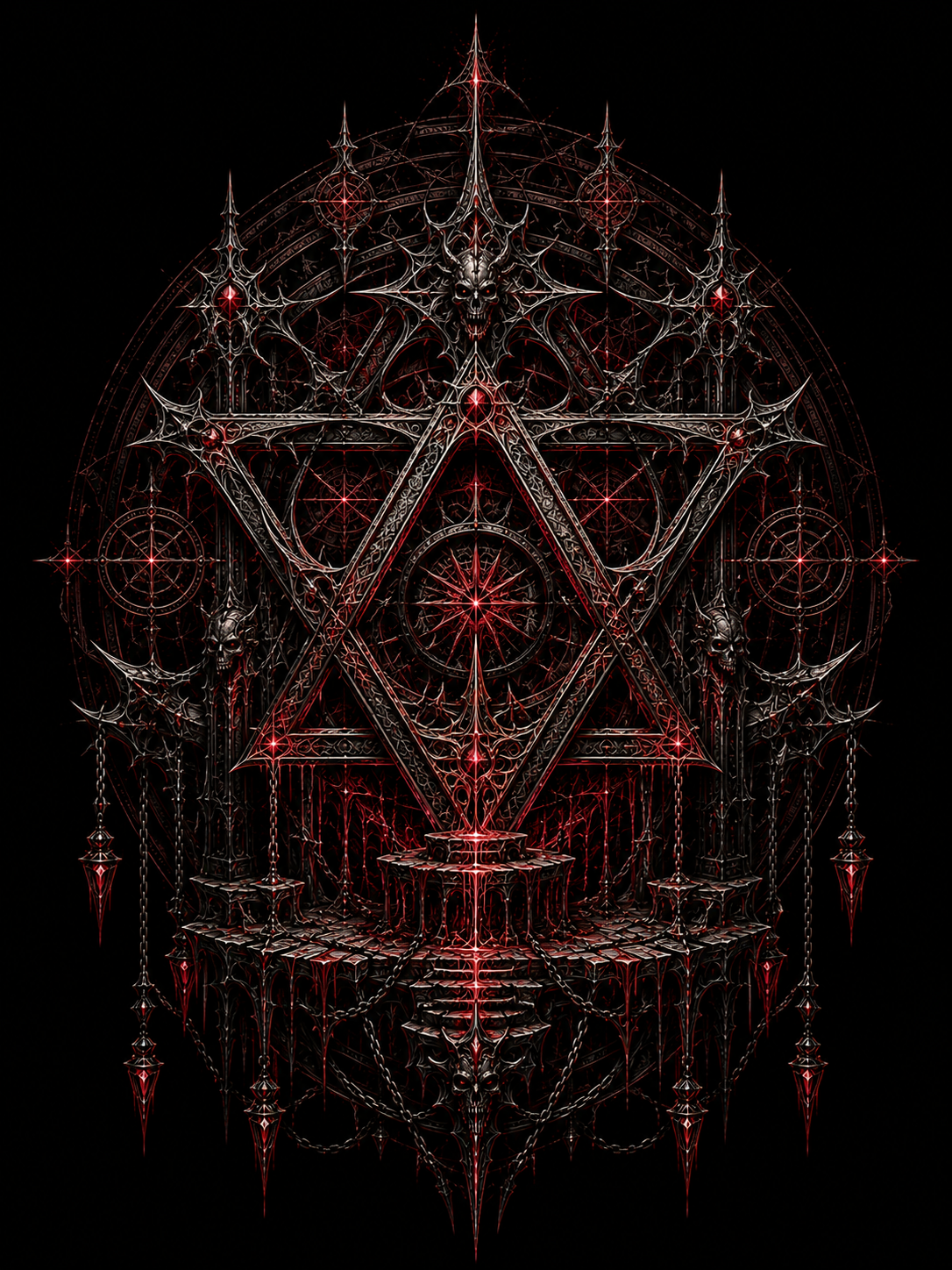
An open sanctuary square contains an imposed vertical standard that pierces its center and blocks the ordinary entrance.
Antichrist.net visual convention: Open sanctuary square pierced by an imposed control standard.
Antichrist.net reading
The civic analogy is capture of a protected institution—court, archive, school, church, platform, or private cognitive space—by an authority that demands singular allegiance.
Misuse warning
Do not call contested worship, architecture, art, political speech, or unfamiliar religious practice an abomination without precise historical and legal context.
What this symbol does not prove
It does not prove that any present religious building, community, policy, or cultural practice fulfills prophecy.
Disputed readings and unresolved questions
Danielic historical reference, Gospel reuse, and later future-oriented readings are not identical and remain contested.
Suggested comparison or manuscript example
Use Daniel 8–9 and Matthew 24 with historical scholarship on Antiochus IV.
Source discipline
Source notes
-
Daniel 8 USCCB Bible
Horn imagery, desecration, and Antiochus-related historical context.
-
Daniel 9 USCCB Bible
Desolation and later reception of desecration imagery.
-
Matthew 24 USCCB Bible
False messiahs and abomination-of-desolation reception.