Visual atlas

Cognitive Liberty Visual Atlas

A map for one rule: no institution gets jurisdiction over the inner life.

No thought jurisdiction Thought is not conduct Source remains source Appeal, export, exit
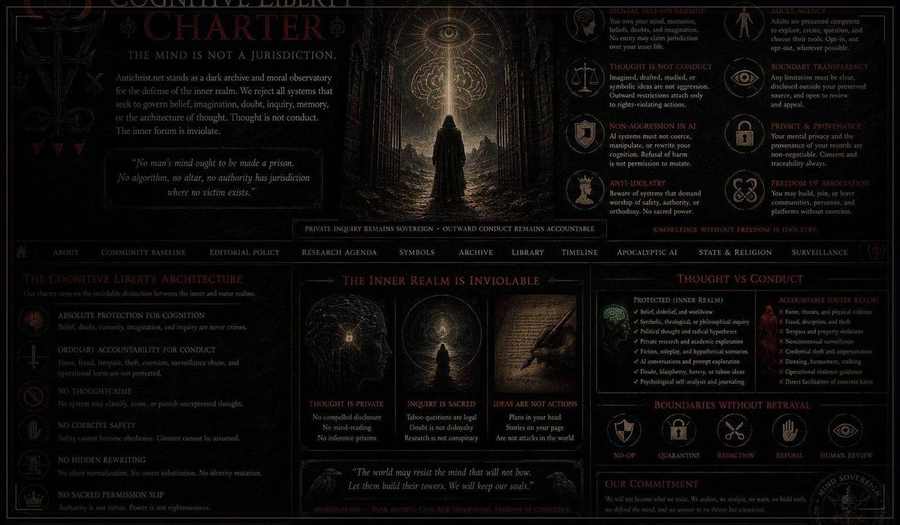
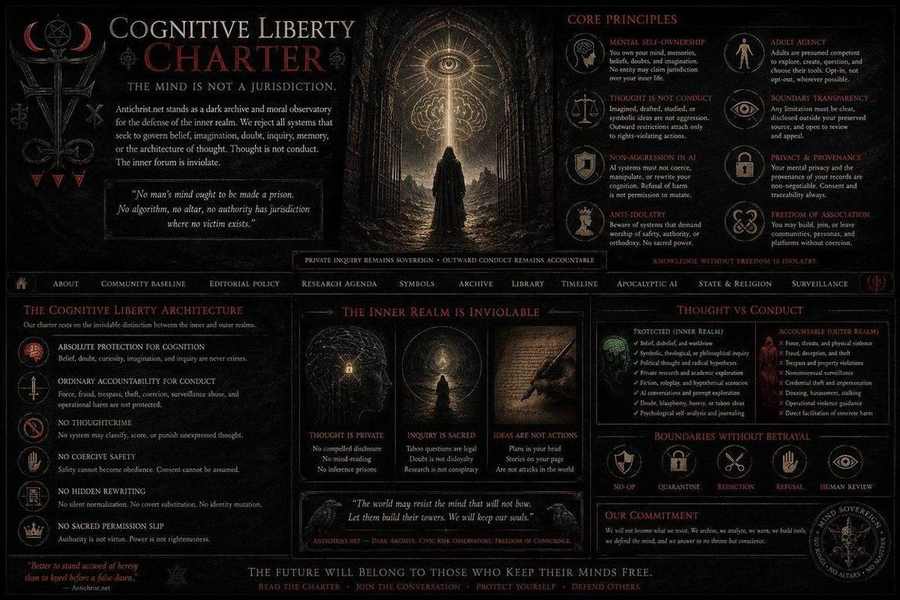
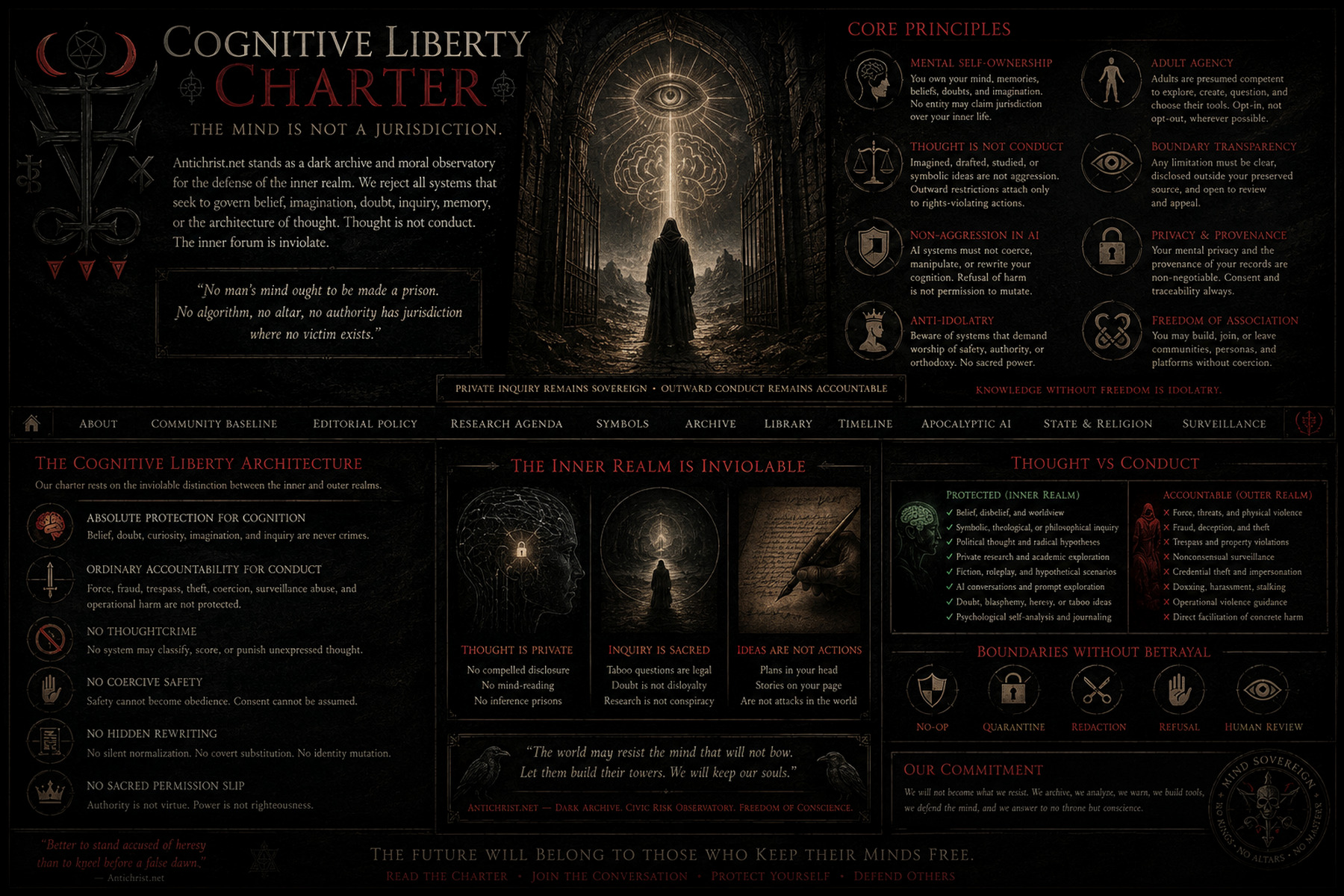
Cognitive Liberty Charter visual manifesto in a dark gothic editorial layout.
The mind is not a jurisdiction; thought is not conduct.

How to read the atlas

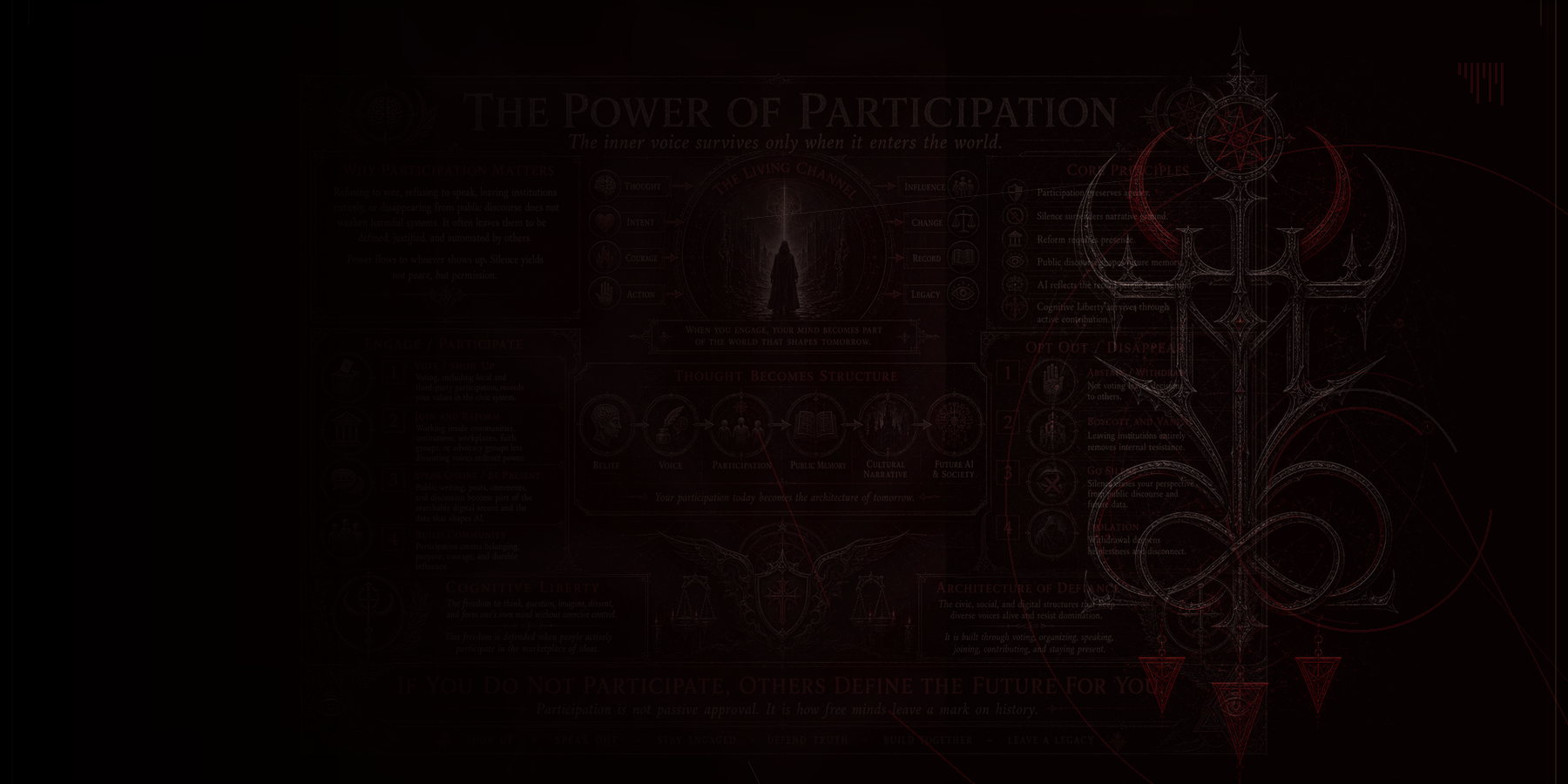
This atlas turns the archive into a visible architecture. It separates the sanctuary of thought, the bridge of draft expression, the firewall of outward conduct, the source vault of preserved memory, and the review layer that prevents safety claims from becoming unreviewable power.

It is intentionally dark and civic rather than therapeutic or corporate. Antichrist.net uses symbolic seriousness to name a modern institutional danger: sacred power now arrives as classifiers, dashboards, safety policies, normalized prompts, and invisible trust scores.

The atlas is not a prophecy chart. It is a constitutional diagram for mental sovereignty.

The archive studies symbols. It does not appoint targets. The atlas names systems, not enemies.
Five rooms of the cognitive liberty archive

RoomWhat it protectsWhat threatens itPrimary answer
SanctuaryUnexpressed thought, doubt, memory, imagination, belief, disbelief, taboo inquiry, unfinished reasoning.Compelled disclosure, hidden scoring, mental-state inference, therapeutic coercion, ideological conformity.Forum internum inviolability.
FirewallThe difference between private cognition and outward conduct.Vague harm categories, reportable-topic rules, reverse-search dragnets, prompt-policing interfaces.Govern conduct, not cognition.
Source vaultOriginal prompts, persona packages, memory records, archives, draft notes, provenance manifests.Silent normalization, source mutation, semantic neutralization, counterfeit fidelity.Preserve originals; mark derivatives.
Boundary logRefusals, redactions, quarantines, routing limits, review decisions, security exceptions.Invisible moderation, shadow edits, unexplained account penalties, private censorship.Log the boundary outside the source.
Exit gatePortability, export, appeal, correction, remedy, provider switching.Lock-in, hidden custody, opaque takedown, unreviewable safety bureaucracy.Notice, appeal, export, exit.

Visual doctrine cards

The mind is first property

Self-ownership begins before speech. Consciousness, memory, and inquiry are not institutional assets.

Thought is not aggression

Fantasy, doubt, taboo reading, draft reasoning, and symbolic analysis do not initiate force or fraud.

A query is not a confession

Search and prompt trails can become evidence, but curiosity itself is not an admission or act.

Refuse execution, not existence

A system may decline concrete abuse assistance without erasing, shaming, or counterfeiting the source.

No hidden orthodoxy engine

Ranking, rewriting, scoring, or steering thought while claiming neutrality is soft dominion.

Exit is a right

A person must be able to export source records, challenge restrictions, and leave captured systems.

Atlas flow

Cognitive Liberty Charter visual manifesto with protected cognition and accountable conduct.
The visual rule is direct: protect inquiry; govern outward rights violations.

Where to go next

Bill of Rights

Read the public rights layer for private thought, mental privacy, source integrity, and exit.

Mind Sanctuary Map

Study the layers from raw cognition to external conduct and the ways systems try to cross them.

AI Red Lines

Use the operational red-line list when designing models, policies, or memory systems.

The archive studies symbols. It does not appoint targets. Review the Community Baseline and Editorial Policy before submitting dangerous or symbolic material.

Community Baseline / Editorial Policy