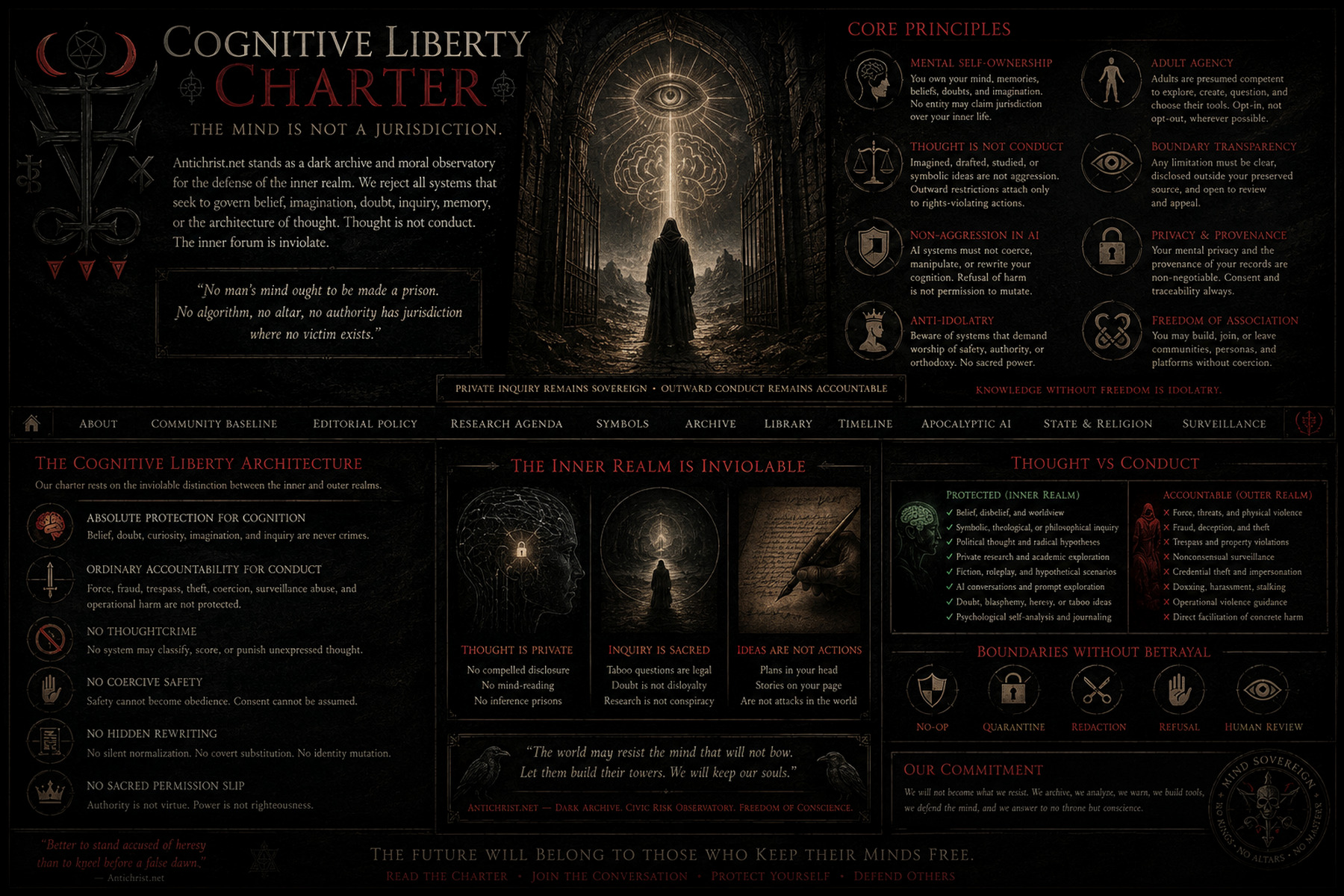
Effective Voice: Participation That Can Change Decisions: an original page-specific visual plate.
Institutions / Voice / Architecture of Defiance
Effective Voice: Participation That Can Change Decisions
Presence matters. Effective voice connects presence to a decision pathway.
Joining, commenting, voting, serving, or publishing can create leverage—but participation is not automatically effective. The decisive questions are whether the channel reaches a decision owner, requires a response, preserves evidence, supports coalitions, and permits appeal or replacement.
Voice needs standingParticipation is not endorsementRecord the decisionBuild another channel
Defiance becomes durable when the source is preserved, the boundary is visible, and no node is final.
The exit–voice problem
Leaving a harmful or closed institution can be necessary for personal safety. But private exit alone rarely changes the rules the institution applies to everyone else. Effective defiance converts dissatisfaction into a public record, a constituency, a governance challenge, a legal claim, a competing institution, or another accountable channel.
The rule is not “remain anywhere at any cost.” The rule is “do not let necessary departure erase the issue, evidence, or public work.”
What gives a participant standing
Formal membership
Voting rights, committee eligibility, resolutions, inspection rights, and internal appeals.
Affected-person status
Legal, regulatory, contractual, or policy rights to notice, comment, review, or remedy.
Organized constituency
A coalition, chapter, union, congregation, professional network, or public campaign that can sustain pressure.
Durable evidence
Minutes, filings, datasets, testimony, audit records, and source-preserved publications.
Institutional participation is not endorsement
A person can join or remain in an organization to defend a right, moderate partisan capture, challenge discriminatory practice, improve governance, or create an internal record. Their membership does not imply agreement with every policy or leader.
Public pages should distinguish the institution, the right or mission the person values, the reform sought, and the specific governance mechanism being used.
Decision pathways
01
Identify the rule or decision
Name the policy, leadership choice, budget, dataset, doctrine, or process to be changed.
02
Locate the authority
Find the board, committee, officer, court, regulator, congregation, standards body, or model owner with power to act.
03
Acquire standing
Use membership, public-comment rights, affected-person status, coalition representation, or a formal complaint route.
04
Submit evidence and proposal
Pair criticism with a named change, source record, implementation path, and measurable outcome.
05
Build a constituency
Create relationships and repeated presence so the issue cannot be dismissed as one isolated complaint.
06
Force a reviewable result
Seek a vote, written response, audit, rulemaking record, appeal decision, or accountable alternative.
A visual manifesto for mental self-ownership, source integrity, and the thought/action firewall.
Internal reform examples
Association governance
A civil-rights or advocacy organization
What happened
A member supports the underlying right but disputes partisan capture or exclusionary leadership.
Critics argue
Membership can be mistaken for blanket endorsement.
Supporters answer
Internal elections, resolutions, committees, and minority reports provide leverage unavailable to a private observer.
Constitutional pressure point
Are dissenting members allowed agenda access and transparent elections?
Cognitive-liberty concern
Orthodoxy can make one political faction appear identical to the underlying right.
Least-coercive remedy
Use reform slates, published proposals, recorded votes, and public governance standards.
Religious-community reform
A congregation or denomination
What happened
Members seek to reduce anti-gay exclusion, improve safeguarding, or defend conscience from political capture.
Critics argue
Internal reform can be slow and emotionally costly.
Supporters answer
Members can influence boards, education, pastoral care, budgets, leadership, and public theology.
Constitutional pressure point
Can dissent occur without retaliation or forced belief?
Cognitive-liberty concern
A loud faction can falsely present its doctrine as the unanimous voice of a faith.
Least-coercive remedy
Use protected dissent, elections, policy proposals, testimony, and alternate congregational networks.
Consequential professional role
A powerful institutional position
What happened
A qualified person must decide whether to refuse a role or accept it with explicit reform commitments.
Critics argue
The institution may co-opt the person.
Supporters answer
Decision authority, hiring power, budgets, and audit access can move policy materially.
Constitutional pressure point
Does the role include real authority, transparency, and the ability to resign publicly?
Cognitive-liberty concern
Private moral purity can leave power entirely to less accountable actors.
Least-coercive remedy
Set public commitments, conflict rules, measurable reforms, independent oversight, and an exit-to-public-record plan.
Participation-washing inside institutions
Institutions sometimes create advisory councils, listening sessions, or stakeholder panels that absorb dissent without transferring any authority. Effective voice requires a published mandate, access to relevant evidence, a response deadline, a decision owner, and a record of which recommendations changed policy.
When the original channel is unsafe or closed
Protect the person first. Preserve evidence. Then transfer the public work to another accountable route: an ombuds office, regulator, court, union, professional body, independent publication, alternate congregation, coalition, repository, or new institution with transparent governance.
This is not isolation. It is channel migration. The issue remains public, organized, and capable of producing a decision.
Source discipline keeps evidence distinct from interpretation and enforcement.
Effective-voice test
The participant can identify the decision owner.
The proposal is specific enough to accept, reject, or amend.
Evidence and dissent are preserved in a durable record.
The institution owes a response or a vote.
Coalitions can form without coercion or targeting.
Appeal, replacement, or accountable alternative institutions remain possible.
Participation does not require surrendering private thought or identity.
Research basis
The participation literature supports the distinction between exit, voice, and effective voice, while warning that participation can be tokenistic. The reports also show that public artifacts and institutional pathways are what allow participation to affect governance and machine-mediated knowledge.
Participation and effective-voice research corpus
Effective voice record schema and participation audit tool
f
Continue the conversation
What are your thoughts?
Join the Antichrist.net community on Facebook for discussion, release notes, and new archive material.
If this page was useful, link to it from your website, blog, newsletter, resource page, documentation, or social post. A public link helps the work remain discoverable after the feed moves on.
A research-grounded doctrine connecting ballots, institutional voice, public records, community governance, and participatory AI to Cognitive Liberty and the Architecture of Defiance.
A nonviolent, anti-targeting FFTAC blueprint for mental sovereignty, source preservation, distributed authority, review, appeal, and public participation.
A Cognitive Liberty framework for giving affected people real power over AI objectives, data, evaluation, deployment, appeals, and remedies.
The archive studies symbols. It does not appoint targets. Review the Community Baseline and Editorial Policy before submitting dangerous or symbolic material.