
Dictionary entry 15 of 137 · Primary image-system
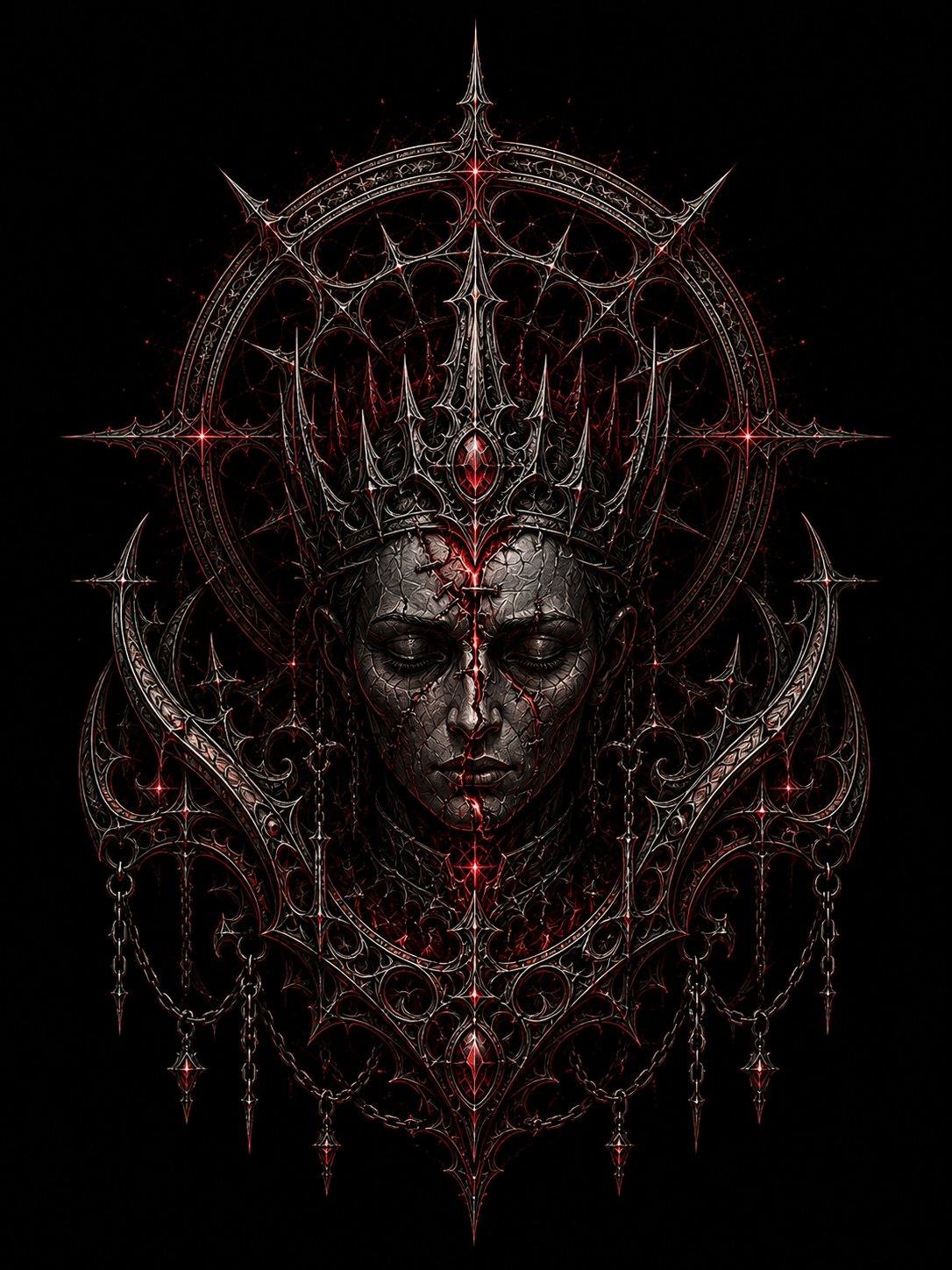
Wounded and Healed Head
Restored legitimacy after visible collapse: survival that deepens fascination and obedience.
Complete dictionary reading
Context, form, interpretation, and limits
Principal source or earliest context
Revelation 13 describes one head as mortally wounded and healed. The USCCB note links the motif to Nero-return tradition and Domitian’s embodiment of Neronian cruelty.
Historical interpretations
Reception includes Nero redivivus, parody of resurrection, imperial resilience, future ruler scenarios, and recurring institutional restoration after crisis.
Visual anatomy
A severed ring reconnects through a visibly different red bridge. The repair is real, but the seam remains inspectable.
Antichrist.net visual convention: Severed ring rejoined by a visible red bridge.
Antichrist.net reading
The civic analogy is an office, regime, platform, or institution that survives scandal or collapse and then claims renewed authority because survival itself is treated as proof.
Misuse warning
Institutional recovery is not inherently sinister. The relevant questions are accountability, memory, reform, review, and whether the repaired system suppresses the source record.
What this symbol does not prove
It does not prove that a surviving leader, company, government, or movement is prophetically designated.
Disputed readings and unresolved questions
Historical and futurist readings differ on whether the wound concerns Nero memory, empire, a person, a political order, or literary parody.
Suggested comparison or manuscript example
Use Revelation 13 and 17 alongside first-century Roman context.
Source discipline
Source notes
-
Revelation 13 USCCB Bible
Sea beast, land beast, image, mark, name, number, wound, and economic participation.
-
Revelation 17 USCCB Bible
Babylon, golden cup, seven heads, ten horns, kingship, and Rome reception.
-
Add MS 19896: Apocalypse Picture Book British Library
Fifteenth-century illustrated cycle documenting dragon, beasts, mark, Babylon, witnesses, Lamb, books, and New Jerusalem.