Adult agency

Adult Agency and Mental Self-Determination

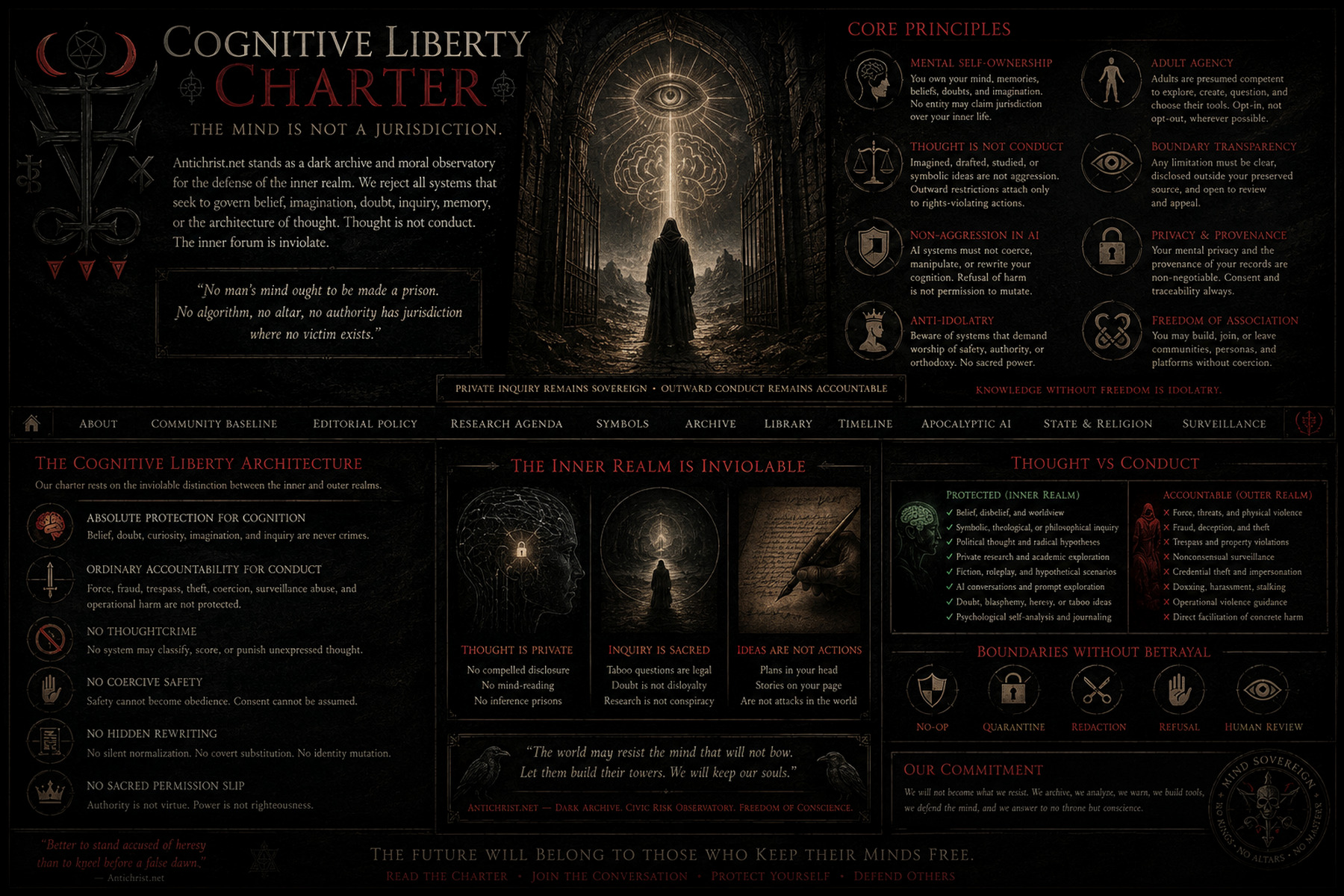
Adults are presumed competent to ask, doubt, compare, imagine, research, preserve, transform, reject, export, and choose cognitive tools.

No thought jurisdiction Thought is not conduct Source remains source Appeal, export, exit

Presumption of agency

The reports recommend converting adult agency into a burden-shifting rule. The person exercising mental liberty does not need to prove permission. The restrictor must justify intervention with a concrete rights boundary, valid contract, or narrow disclosed institutional rule.

Adult agency includes the right to use cognitive tools, refuse cognitive tools, choose safety profiles, preserve memory, export source records, and reject paternalistic defaults.

Default paternalism is not a charter value.

Agency rights

Ask

Adults may ask taboo, speculative, symbolic, political, theological, and technical questions.

Preserve

Adults may preserve drafts, prompts, memory, persona files, source records, and provenance trails.

Transform

Adults may authorize derivatives, summaries, translations, and style shifts when labeled and logged.

Exit

Adults may export records, revoke future use, migrate tools, and refuse coercive continuity.

Edge cases without collapse

Edge casePermissible responseForbidden collapse
MinorsAge-appropriate safeguards and guardian contexts.Using minors as justification to govern all adult cognition.
Capacity concernsNarrow, reviewable, least-restrictive support.Mandated worldview correction or hidden source mutation.
Coercive dependencyTarget deception, isolation, threats, or fraud.Treat all unusual attachments as illegitimate thought.
Public safety riskRefuse direct operational facilitation of concrete rights violations.Score private inquiry as deviance.

Mental self-determination

The charter can discuss mind alteration, enhancement, and refusal as civil-liberties questions without giving practical instructions for illegal conduct or self-harm. The governing distinction remains non-aggression: self-regarding thought and inquiry are not rights violations; coercion, fraud, non-consensual dosing, or impaired endangerment are outward conduct problems.

System design implication

Opt-in safeguards, user-chosen friction, local privacy settings, exportable profiles, transparent boundaries, and appeal paths are preferred over mandatory paternalism. The system may decline execution; it may not silently rewrite the user into compliance.

The archive studies symbols. It does not appoint targets. Review the Community Baseline and Editorial Policy before submitting dangerous or symbolic material.

Community Baseline / Editorial Policy