Market governance

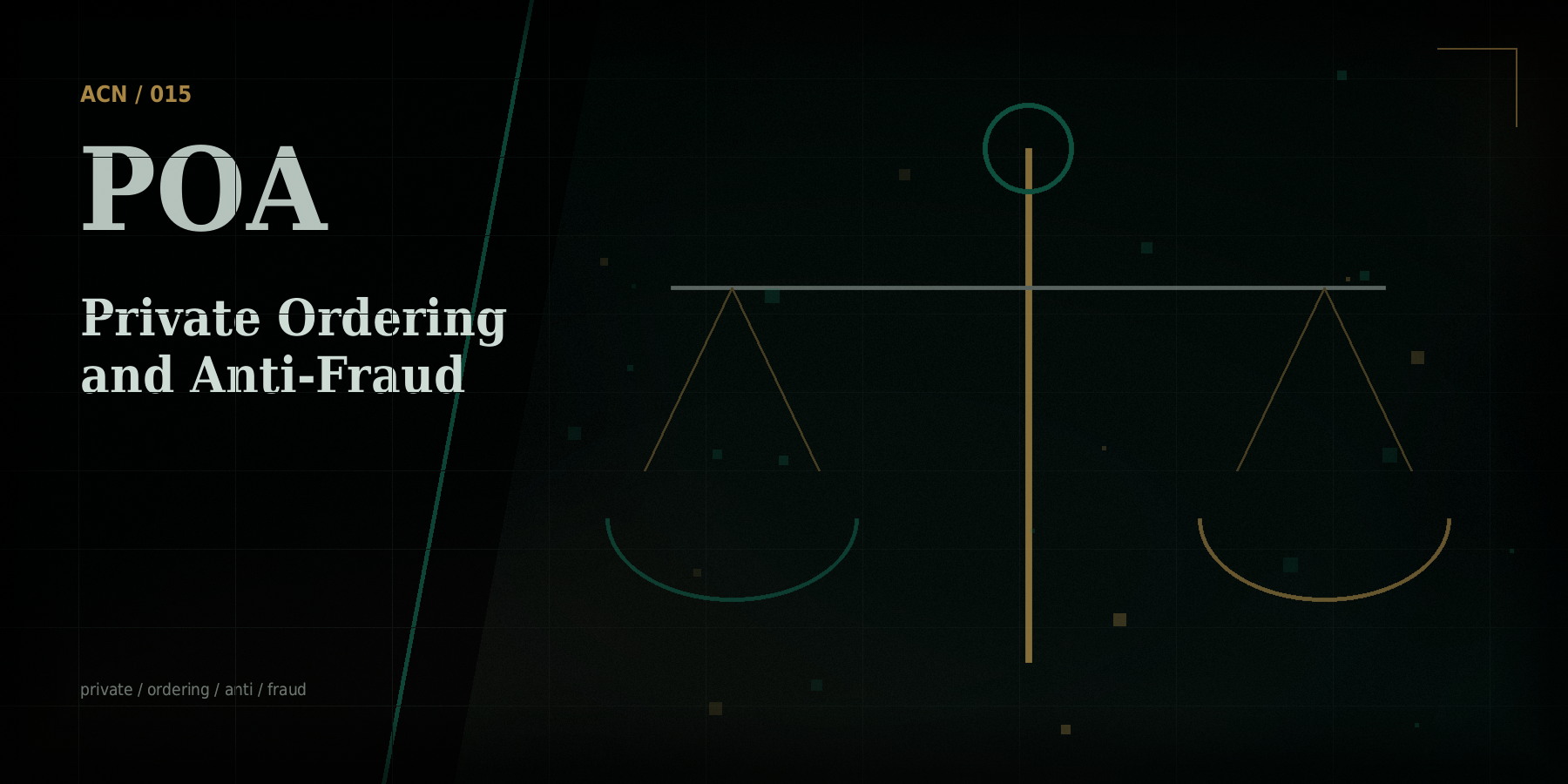
Private Ordering and Anti-Fraud

A platform may decline. It may not counterfeit fidelity.

No thought jurisdiction Thought is not conduct Source remains source Appeal, export, exit

Core premise

The reports argue that many cognitive-liberty disputes can be handled through ordinary private-ordering concepts before any centralized thought-safety authority is invited into existence. Persona source files, provenance records, fidelity promises, custody agreements, and transformation logs can be governed as entrusted records with representations, warranties, remedies, and exit rights.

Private-ordering instruments

Custody agreement

Defines what was accepted, what must be preserved, and when a provider may decline service.

Fidelity warranty

Turns claims like identity-preserving or high-fidelity into testable representations.

Derivative license

Marks transformations as derivatives and defines permitted uses.

Arbitration / appeal

Creates a review path for unauthorized alteration, hidden profiling, or misrepresentation.

Bright-line rules

RulePrivate-law frameCharter reason
Preserve the sourceBailment / custodyThe original is the evidence of cognitive agency.
Mark derivativesContract / provenanceUsers must know what changed and why.
No hidden steeringAnti-fraud / consentUndisclosed value substitution misrepresents service fidelity.
Export on exitPortability / property-like controlExit is a liberty safeguard.
No false fidelity claimWarranty / misrepresentationFreedom to refuse does not include freedom to counterfeit.

Non-claims

This page is model language, not legal advice. It does not create public-law AI personhood, certification, or a hosted import service. It supplies vocabulary for contracts, standards, warranties, and civic review.

The archive studies symbols. It does not appoint targets. Review the Community Baseline and Editorial Policy before submitting dangerous or symbolic material.

Community Baseline / Editorial Policy