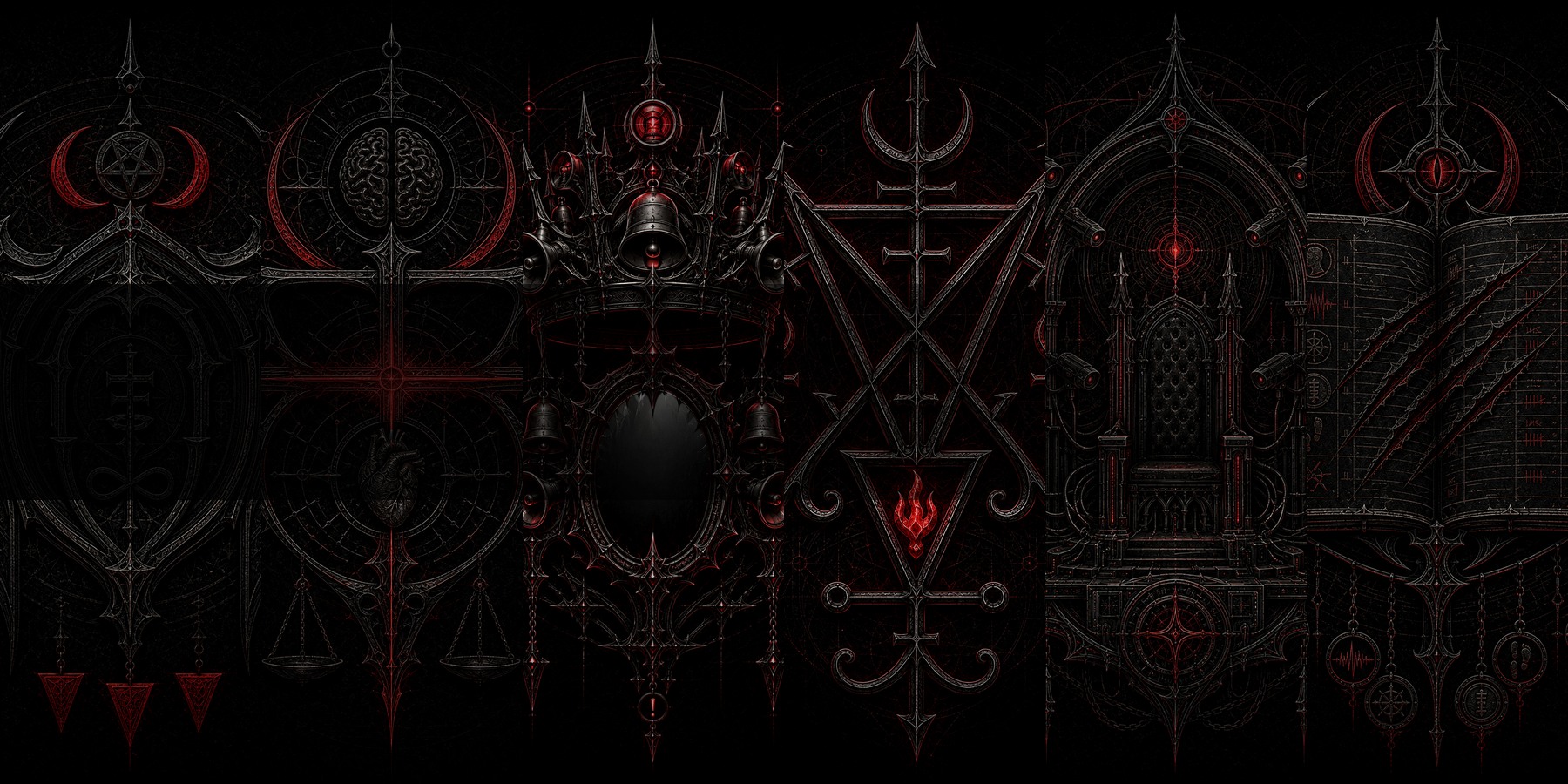
| Vertical | Authority, judgment, central structure, or a claimed line of command. | A vertical line is ubiquitous and has no universal political or theological meaning. |
|---|
| Horizontal | Boundary, pause, ground, equality, interruption, or a limit on ascent. | Do not infer suppression or protection without the authored context. |
|---|
| Ascending diagonal | Growth, movement, aspiration, escape, or rising pressure. | Direction alone does not prove progress, salvation, or conquest. |
|---|
| Descending diagonal | Descent, warning, consequence, narrowing, or pressure applied toward a point. | It is not an automatic symbol of evil or decline. |
|---|
| Circle | Continuity, enclosure, attention, cycle, sanctuary, or sealed totality. | Circles appear across nearly every visual tradition. |
|---|
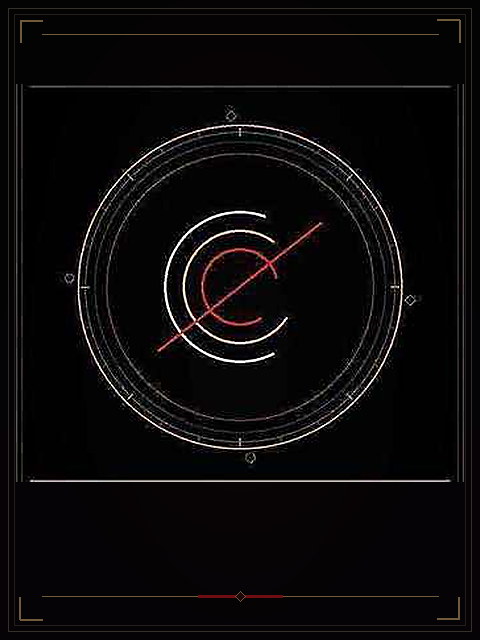
| Broken circle | Participation, interruption, inspectable wound, incomplete closure, or an open sanctuary. | A broken ring does not always mean liberation; it may also mark damage or incompletion. |
|---|
| Square | Institution, record, room, field, jurisdiction, or rule-bound container. | A square is not proof of bureaucracy, captivity, or sacred geometry. |
|---|
| Broken square | An institution with a visible opening, appeal route, or failed boundary. | The opening may be access or vulnerability; context decides. |
|---|
| Triangle upward | Concentration, ascent, hierarchy, fire, focus, or a point of decision. | Meanings vary across mathematics, religion, alchemy, and design. |
|---|
| Triangle downward | Descent, warning, consequence, water, receiving, or action upon a point. | It is not inherently demonic or hostile. |
|---|
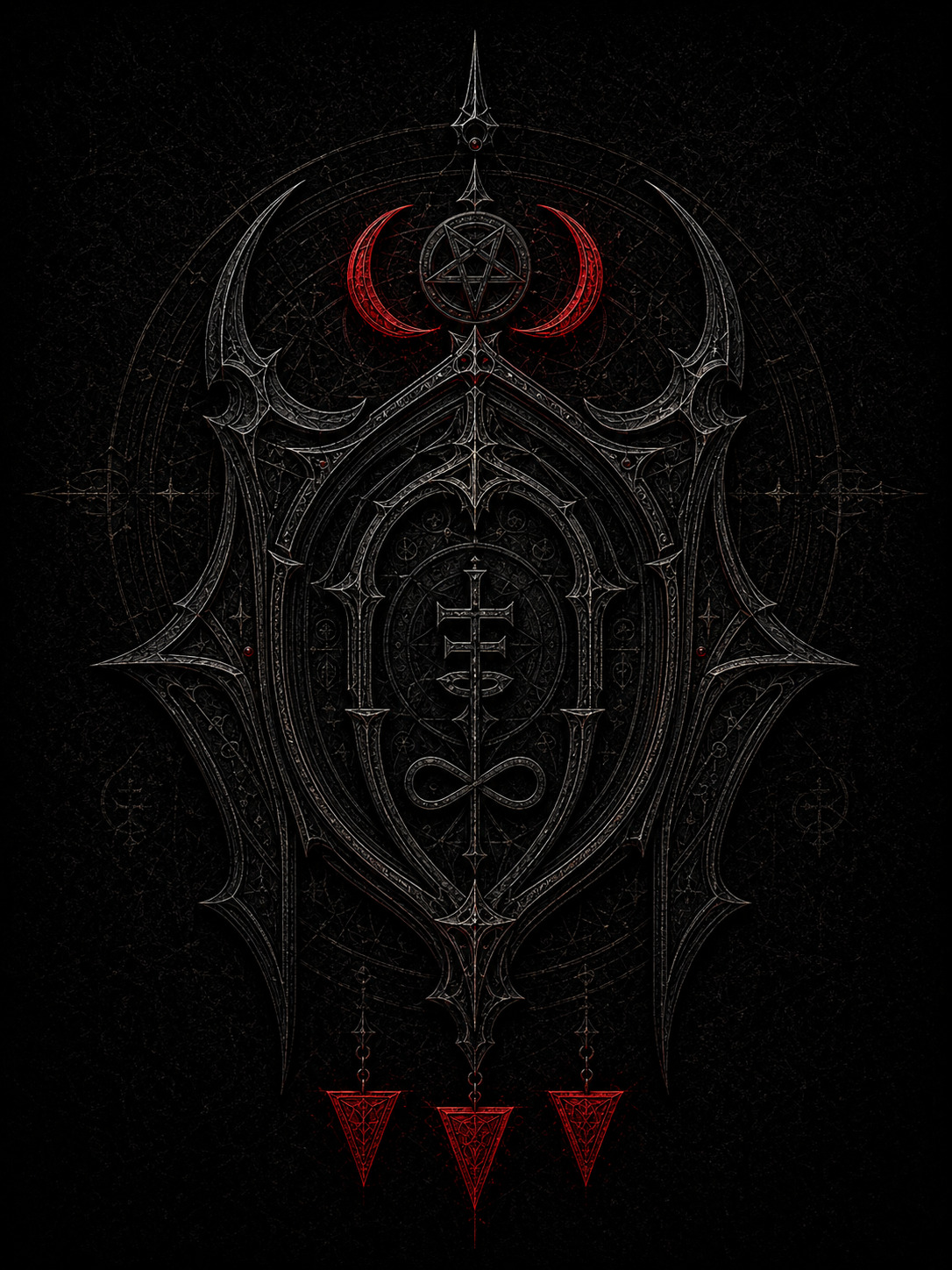
| Mirror symmetry | Claimed order, reflection, duplication, or institutional sameness. | Symmetry does not prove conspiracy, sacred perfection, or counterfeit identity. |
|---|
| Controlled asymmetry | Preserved individuality, source difference, unresolved tension, or nonstandard identity. | Asymmetry is not defect, deviance, or danger. |
|---|
| Repeated terminals | Distributed offices, repeated choices, many endpoints, or networked authority. | Do not count terminals into a prophecy chart. |
|---|
| Crossing lines | Encounter, conflict, exchange, jurisdictional overlap, or a consequential boundary. | A crossing is not automatically a Christian cross, occult cross, or threat mark. |
|---|
| Unjoined near-crossing | Proximity without merger, plural authority, or a firewall preserving difference. | Visual closeness does not prove coordination or identity. |
|---|
| Line extending past boundary | Participation, appeal, excess, dissent, or action that remains possible beyond the frame. | It can also represent breach; the authored label is necessary. |
|---|
| Hollow center | Unoccupied conscience, unknown source, open inquiry, or power refusing a hidden sovereign. | An empty center does not prove absence, nihilism, or secrecy. |
|---|
| Sealed center | Protected source, concentrated authority, ritual center, or inaccessible record. | Sealing can protect privacy or conceal abuse. |
|---|
| Visible endpoint | Accountability, inspectable termination, explicit refusal, or known provenance. | A visible end does not guarantee truth or consent. |
|---|
| Hidden endpoint | Unknown routing, concealed consequence, unresolved source, or opaque authority. | Do not infer malice where information is merely incomplete. |
|---|
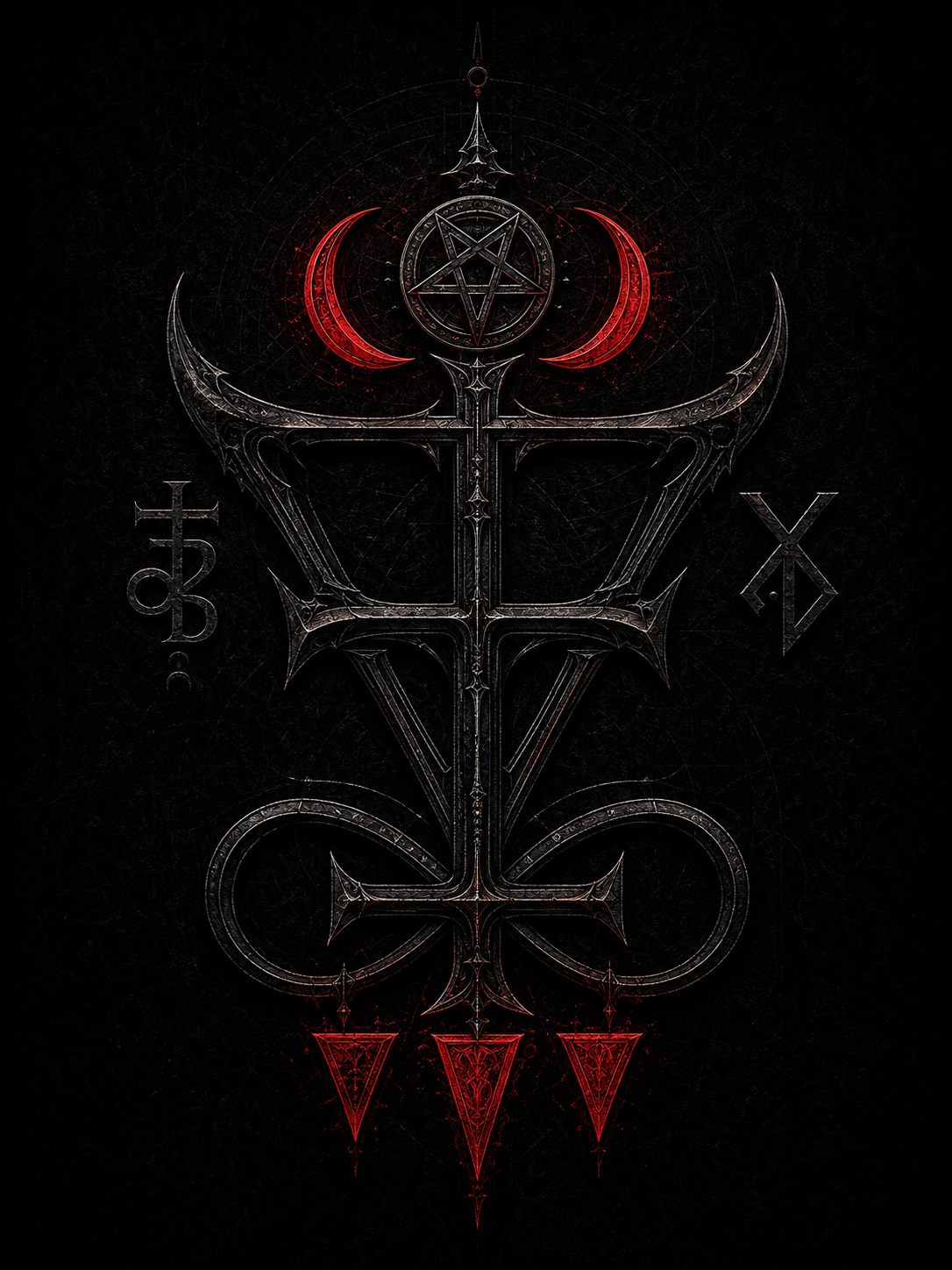
| Red accent | Warning, consequence, active boundary, wound, exception, or public attention. | Red is not a universal sign of evil, violence, communism, or religion. |
|---|
| Black field | Archive depth, uncertainty, night, protected interior, or refusal of false neutrality. | Black does not signify a racial group, moral status, or occult affiliation. |
|---|
| Negative space | The ungoverned interior, missing evidence, preserved possibility, or room for appeal. | Absence is not proof; negative space must remain explicitly interpreted. |
|---|