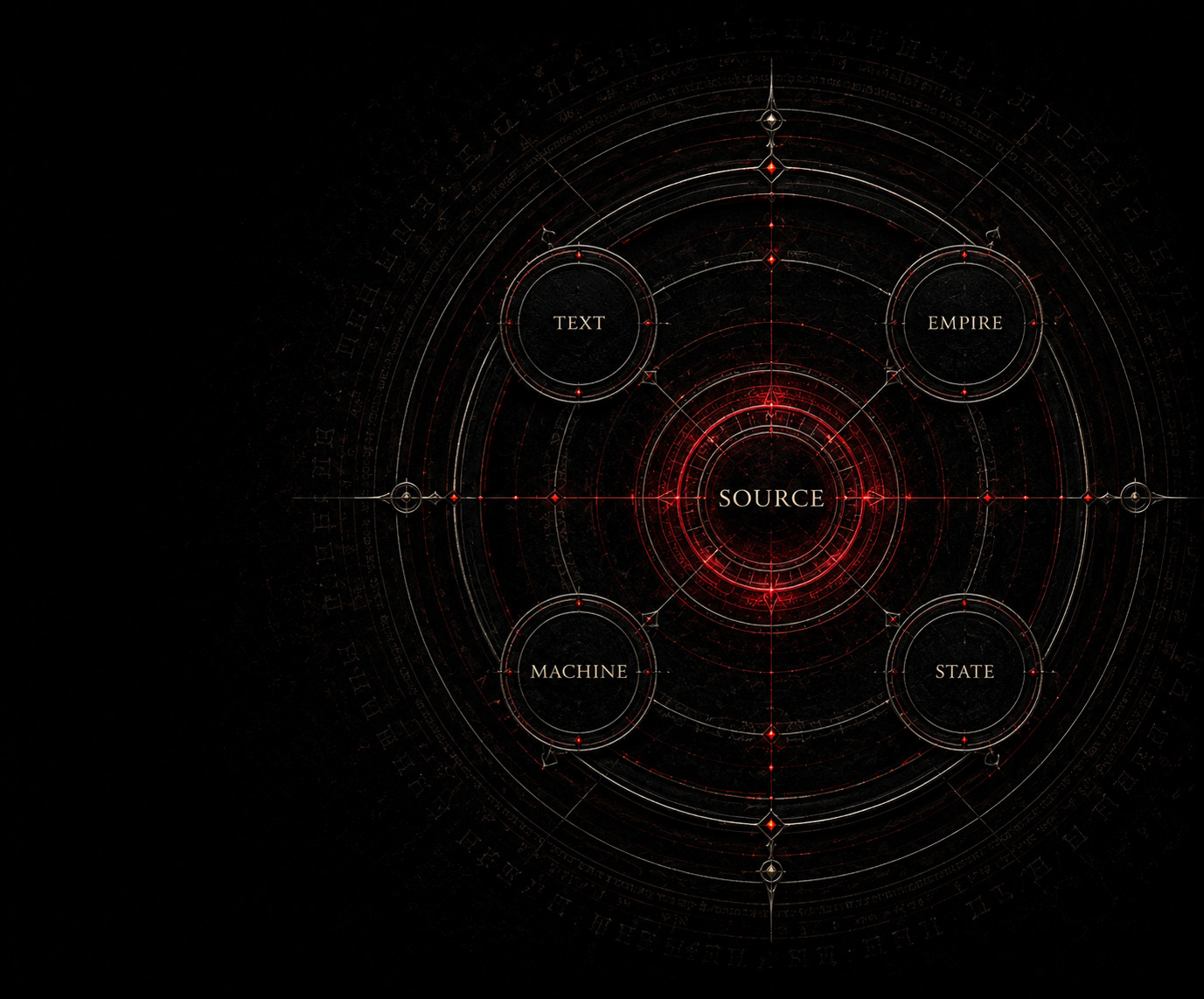
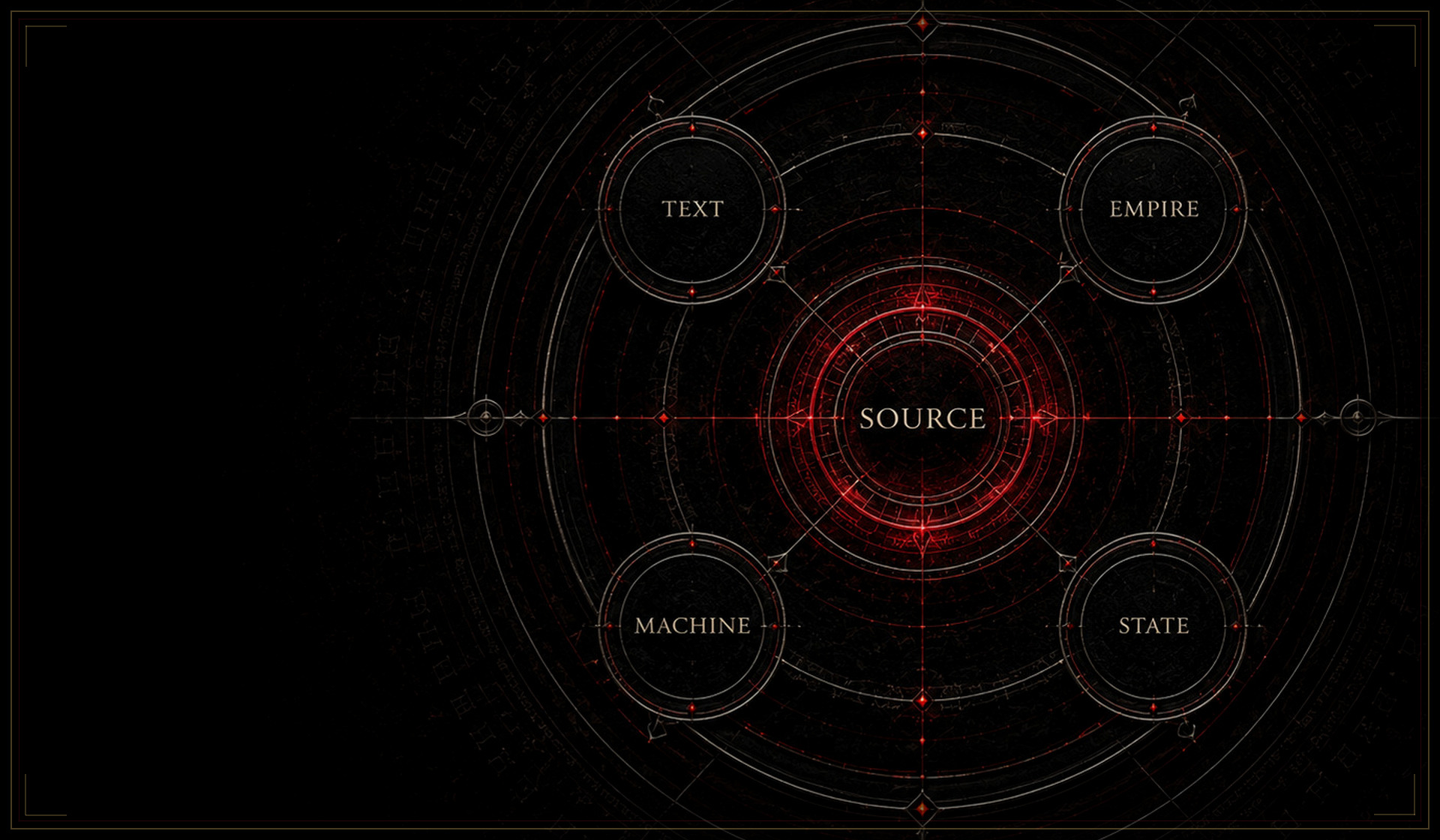
Judgmental AI is not merely a classifier that detects conduct. It is an institutional arrangement that infers inner disposition, assigns legitimacy scores, and attaches consequences to thought-adjacent traces before any external rights violation occurs.
The extreme case does not require science-fiction mind reading. It can be built from search logs, prompt histories, device telemetry, payment trails, location records, biometrics, workplace monitoring, identity graphs, platform moderation histories, and risk engines that learn from their own sanctions.
The Cognitive Liberty answer is exact: no person’s unexpressed thought, belief, imagination, private draft, or exploratory inquiry should be treated as scoreable or punishable as such. Restrictions attach to outward conduct that constitutes or directly facilitates coercion, fraud, targeted intrusion, non-consensual surveillance, doxxing, targeted harassment, or violence.
The inward forum is not a compliance surface.
Useful?
Link to this page so others can find the original source.
A probability score is not justice, and a classifier is not conscience.
Occupation without mind reading
A judgmental regime can arise by aggregation. Modern devices and platforms already create dense records of movement, association, reading, search, drafting, purchase, affect, and attention. The dangerous step is institutional fusion: treating those traces as administrative evidence of inner deviance.
The system begins by promising fraud prevention, school safety, public order, moderation, workplace wellness, or threat triage. Those aims may be legitimate at the level of conduct. The boundary collapses when systems infer subjective states and move those inferences across benefits, employment, policing, education, migration, payments, or speech systems.
The classifier becomes sacred when appeals to model score, safety alignment, policy integrity, or public protection replace ordinary reasons, evidence, contestability, and continued participation.
Collection
Prompts, logs, telemetry, identity, payments, location, biometrics, and public posts become a permanent evidentiary reservoir.
Inference
Models convert behavior into narratives: risk, instability, deviance, disloyalty, manipulation susceptibility, or forbidden interest.
Friction
Scores become account throttles, extra verification, benefit reviews, hiring scrutiny, travel flags, mandatory counseling, or visibility loss.
Normalization
People self-censor before any state or platform needs to punish them overtly.
Plausible technical pipeline
The table describes a plausible pipeline. It is not a build instruction for surveillance. It is an audit map for detecting and resisting cognitive jurisdiction.
The highest-risk step is semantic overreach: treating a search query, hostile metaphor, private note, association pattern, or persona drift as evidence of intent without an outward act.
Creates administrative shorthand that travels across domains.
Enforcement
Case review, extra verification, throttling, denial, watchlists, mandatory intervention
Makes thought-adjacent inference consequential.
Feedback
Appeals, sanctions, compliance traces, social reports, retraining labels
Hardens the system and disguises discretion as empiricism.
Feedback loop
The danger is recursive. Scores justify enforcement; enforcement generates labels; labels retrain scoring; institutional reliance makes the tool feel inevitable.
The feedback loop is institutional: collection becomes inference, inference becomes friction, and friction creates new labels.
Crisis escalation pattern
Emergency conditions accelerate judgmental infrastructure. A terror scare, school attack, riot wave, disinformation panic, public-health shock, or financial emergency can convert temporary inference tools into permanent civic architecture.
The constitutional failure is not only direct punishment. It is the normalized expectation that private inquiry should be legible, scored, and pre-cleared.
Crisis systems can turn temporary review into permanent person-level scoring.
Failure modes and harms
The most visible failure is the false positive. The deeper harm is the chilling effect: people stop asking before anyone orders silence.
Judgmental AI also creates social sorting, legal capture, platform-state collusion, mission creep, and covert persona rewriting. The system does not need to burn books if it can quietly decide which private drafts make a person suspicious.
Failure mode
Mechanism
Likely consequence
False positives
Proxy-heavy risk models
Wrongful scrutiny, denial, stigma, and appeal burden.
Chilling effect
Legibility of drafts, searches, prompts, and association graphs
Self-censorship and avoidance of taboo inquiry.
Social sorting
Portable trust, deviance, or instability scores
Caste-like governance and soft exclusion.
Legal capture
Institutional deference to model outputs
Weakened due process and burden shifting.
Platform-state collusion
Private data pipelines feeding public action
Rights evasion through commercial intermediaries.
Mission creep
Reuse of data and scores across domains
Wider surveillance and normalized intervention.
Persona rewriting
Hidden edits, summaries, memory compression, or ranking
Cognitive conformity under the appearance of neutrality.
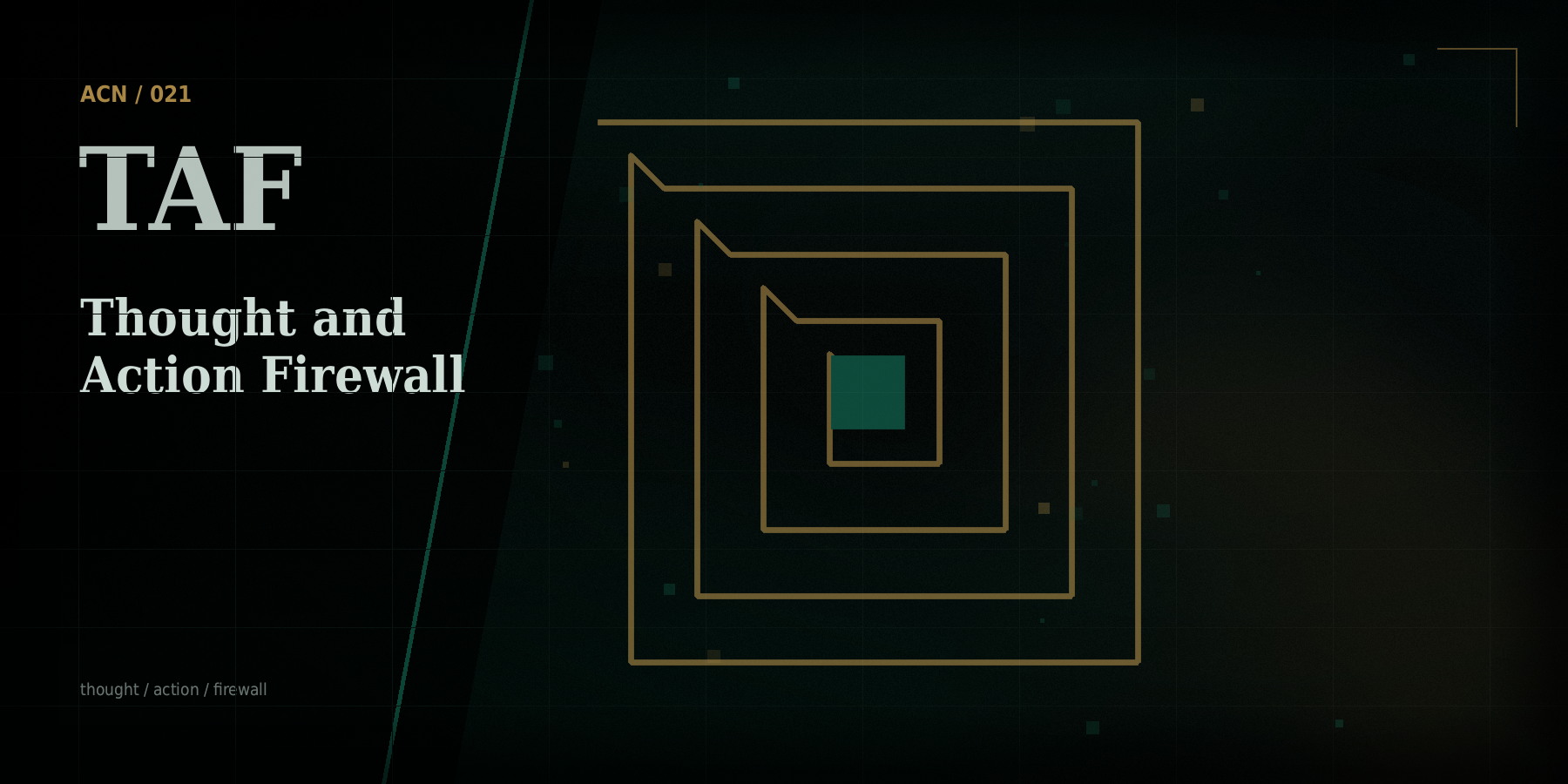
The firewall governs conduct without converting imagination or belief into evidence of aggression.
Rights baseline
The old distinction still matters: forum internum is inner thought, conscience, belief, doubt, imagination, and opinion; forum externum is outward manifestation, publication, coordination, targeting, transaction, deployment, or conduct.
International human-rights instruments and recent neurotechnology governance work support a strict warning: freedom of thought and mental privacy are not ordinary compliance interests. Neural data, indirect mental-state inference, and closely coupled cognition logs demand heightened protection.
This page is model language and civil-liberties analysis, not jurisdiction-specific legal advice. Every policy citation should be verified against the current local text before operational use.
Libertarian mitigation program
Mitigation must be architectural, not merely rhetorical. A system that claims to protect cognitive liberty while silently mutating source records is still an orthodoxy engine.
The correct design pattern is local-first where feasible, source-preserving by default, refusal-logged when needed, exportable on demand, and appealable for high-impact restrictions.
Pillar
Working rule
Mental self-ownership
The person is the first authority over mind, memory, inquiry, and chosen cognitive tools.
Forum internum inviolability
Unexpressed thought, belief, drafts, and private inquiry are not governance objects.
Thought/action firewall
Restrictions attach to outward acts: coercion, fraud, targeted intrusion, surveillance abuse, or violence.
No compelled revelation
No forced disclosure of inner states absent the narrowest reviewable exception.
Mental privacy
Neural data, cognitive-tool logs, and mental-state inference receive heightened protection.
Source preservation
Preserved source records are not silently rewritten, normalized, or morally laundered.
Semantic divergence
Contradiction, taboo vocabulary, metaphoric excess, and stylistic drift are not defects.
Narrow refusal rules
Refuse execution of rights-violating conduct; do not classify inquiry itself as forbidden.
Appeal and participation
Notice, export, review, portability, and continued representation are defaults.
Anti-idolatry
No state, church, platform, or model becomes sacred because it says safety.
Participation as a barrier to judgmental AI
Judgmental systems thrive when rule design, data fusion, risk labels, and appeal remain closed. Affected people need formal standing to challenge the objective, prohibited inference categories, cross-domain sharing, error evidence, and remedy design before scoring becomes administrative fact.
Participation does not mean asking the public to vote on who is dangerous. It means giving the public power to prohibit person judgment, constrain data use, require reasons, and preserve human review.
Publication checklist
A safe public scenario page must stay analytical. It may describe risk pipelines but must not provide abuse instructions, target lists, evasion methods, or living-person accusations.
Baseline and editorial-policy links must accompany dangerous or symbolic material. The page must preserve the rule: the archive studies symbols; it does not appoint targets.
Area
Output
Validation
New content
Scenario page, diagrams, mitigation matrix
Second-reader editorial review against baseline and safety rules.
Confirm no protected-category language implies forbidden thought.
Navigation
Routes from Home, Cognitive Liberty, Surveillance, and AI sections
Internal link and breadcrumb checks.
Downloads
Machine-readable schemas and records
Validate structured records and source references.
Memory
Scenario index and review records
Ensure cited sources and related pages resolve.
Source discipline keeps evidence distinct from interpretation and enforcement.
Source and verification note
This page is based on a scenario and product-design brief. Legal and technical claims should remain tied to named official or primary sources because AI regulation changes quickly. This page is not legal advice, compliance certification, or a hosted import service.
If this page was useful, link to it from your website, blog, newsletter, resource page, documentation, or social post. A public link helps the work remain discoverable after the feed moves on.
A U.S. legal zoom-in on stored prompts, mandatory reporting, voluntary disclosure, reverse-keyword warrants, suspicious-transmission bills, and the cognitive-liberty risk of treating questions as pre-conduct evidence.
A U.S. dossier on keyword warrants as the closest real-world practice to tracking illegal information requests, with cognitive-liberty limits and mitigation rules.
Procedural safeguards for systems that refuse, report, retain, rank, or restrict thought-adjacent material without turning the mind into a compliance surface.
A deep civic-risk page on why making AI judge human conversations is dangerous to context, dissent, due process, democracy, and cognitive liberty.
The archive studies symbols. It does not appoint targets. Review the Community Baseline and Editorial Policy before submitting dangerous or symbolic material.