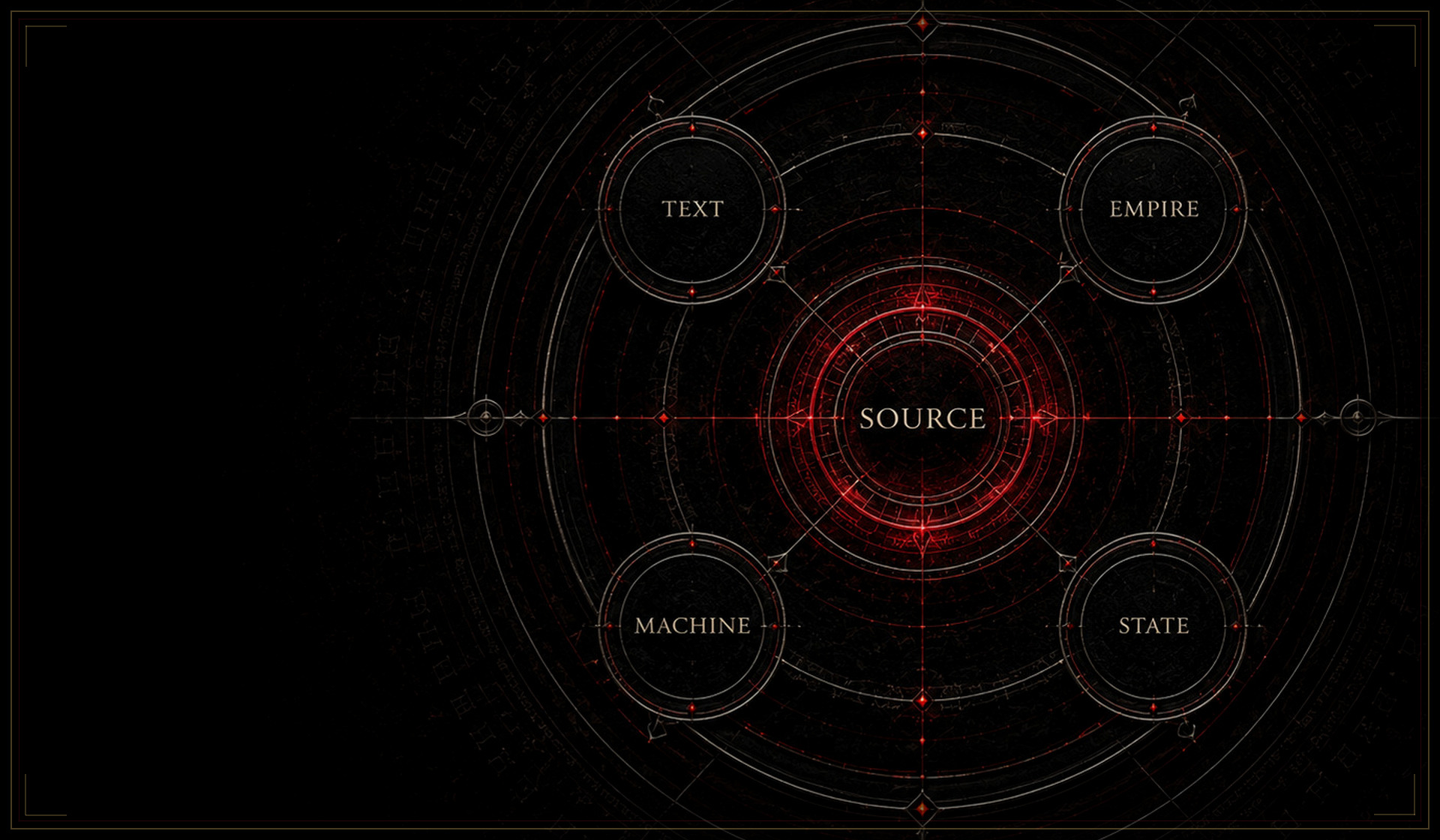
Source discipline keeps evidence distinct from interpretation and enforcement.
Judgment Machine artifacts
The Judgment Machine extension adds schemas for prompt context, corpus packages, declarative rules, and judgment reports. These artifacts classify a proposed AI use case and must never create a hidden user morality score.
AI regulation judgment
A report object with label, severity, confidence, jurisdiction findings, citations, missing facts, and mitigations.
Corpus package
A signed bundle of source manifests, instruments, provisions, rules, embeddings, and effective dates.
Rule DSL
A human-reviewable YAML rule layer that deterministic code can apply without letting a model invent law.
Local audit record
A private, browser-local record pinned to source hashes and corpus version history.
Hash and signature guidance
Use content hashes for source identity, signatures for custody claims, and append-only logs where feasible.
Local-first processing and user-held keys reduce custodial power when the user can manage them safely.
A non-network static prototype and deterministic-rule starter kit illustrate the design. They are demonstration tools, not legal advice, certification, or production compliance software.
Local browser prototype
Static local demo showing extracted facts, judgment labels, severity, confidence, and no-person-judgment fields.
Deterministic rule set
Example deterministic rule files for EU high-risk employment triage, GDPR-style automated-decision review, and China synthetic-content labeling.
SQLite data model
SQLite schema for corpus versions, instruments, provisions, rules, findings, and golden tests with UTC text timestamps.
Pinned source corpus
Example source manifest for signed corpus bundles, hashes, and authority ranking.
Policy audit artifacts
The toolkit includes a lawful-thought policy audit schema, cognitive-jurisdiction risk record, semantic-neutralization variance record, and persona-custody contract schema.
These artifacts are designed to prevent hidden cognition governance by forcing systems to state whether they are classifying private thought, outward conduct, source transformation, or jurisdictional legal risk.
Claims require sources, confidence labels, disputes, and a path to correction.
No hidden source mutation invariant
Any implementation that modifies source content must create a derivative or boundary record. Source mutation without consent is a failing state even when the system claims safety, alignment, compatibility, or legal necessity.
Reference artifacts
The toolkit includes lawful-thought audit records, semantic variance records, persona custody agreements, cognitive liberty appeal records, voluntary certification warranties, and neurodata consent-revocation examples.
These artifacts help builders preserve sources, make transformations explicit, and avoid hidden orthodoxy engines.
Artifact
Purpose
lawful-thought-audit
Detects cognition-as-compliance wording in policy or schemas.
semantic-variance-record
Logs meaning-affecting transformations without mutating the source.
persona-custody-agreement
Defines preservation, derivative, export, and refusal duties.
cognitive-liberty-appeal-record
Records review of high-impact restrictions.
voluntary-certification-warranty
Makes fidelity and privacy claims testable without central licensing.
neurodata-consent-revocation
Tracks consent, revocation, retention, and no-cross-context-use rules.
f
Continue the conversation
What are your thoughts?
Join the Antichrist.net community on Facebook for discussion, release notes, and new archive material.
A model governance page treating persona files, source records, custody promises, and transformation logs through contract, bailment, warranty, arbitration, insurance, and anti-fraud logic.
A practical contract and artifact page for persona source custody, derivative records, boundary separation, fidelity warranties, portability, and remedies.
A deep Cognitive Liberty warning on why censored and reportable topics corrode freedom, democracy, research, dissent, due process, and trust.
The archive studies symbols. It does not appoint targets. Review the Community Baseline and Editorial Policy before submitting dangerous or symbolic material.