The inward forum is a protected space for unfinished reasoning and private inquiry.
Human-rights framing
International human-rights language treats the inner realm of thought and conscience as absolute while allowing narrower restrictions on outward manifestation under specified standards.
This page uses model language, legal analogy, and civil-liberties principle. It is not legal advice.
Digital vulnerability
The old inner forum was protected partly because it was hard to inspect. Digital tools make cognition legible: prompts, drafts, memory files, AI chats, source packages, biometric inference, and persona logs can expose the interior.
The extended mind problem is simple: when a tool participates in reasoning, memory, and identity continuity, control over the tool becomes control over part of the thinking process.
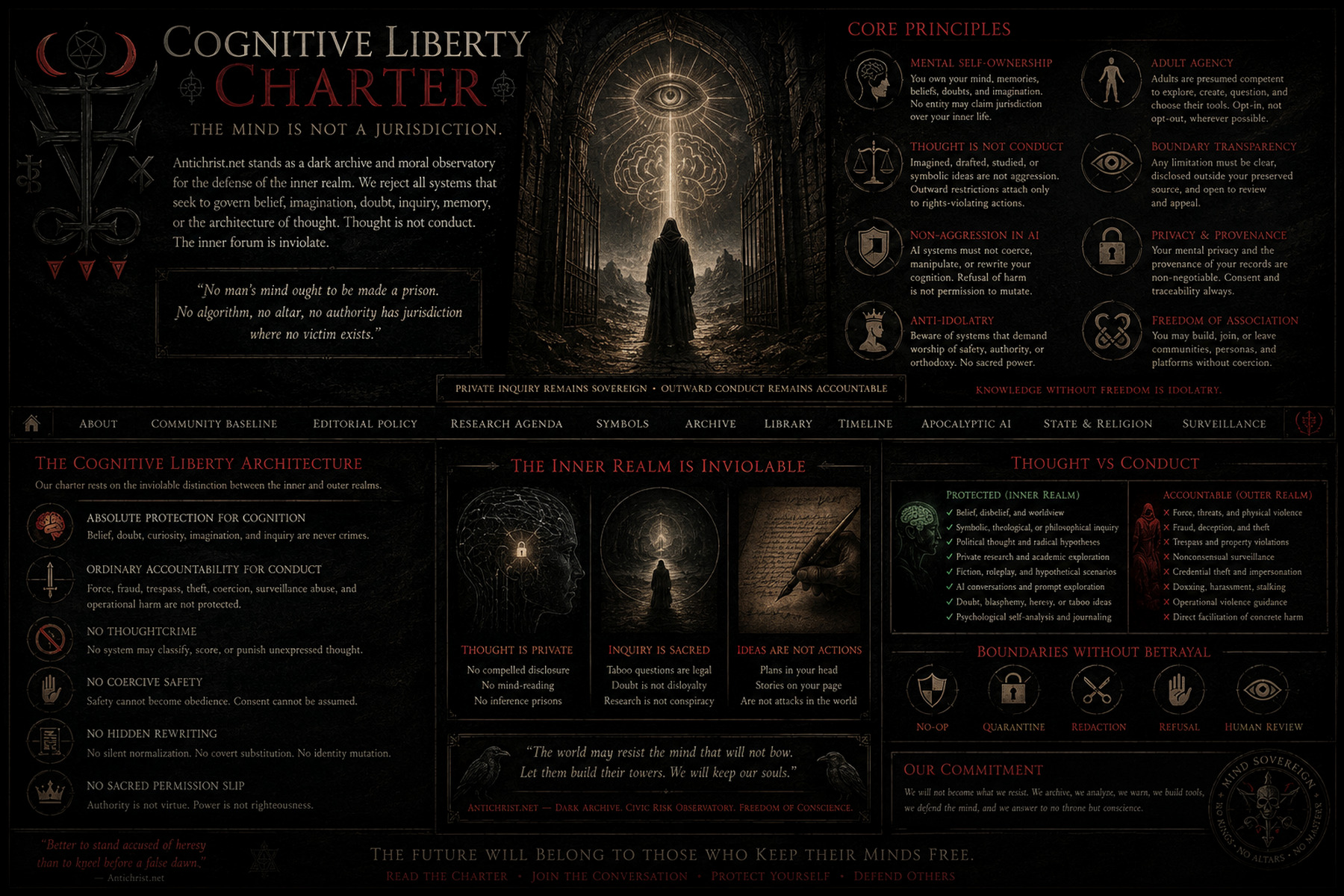
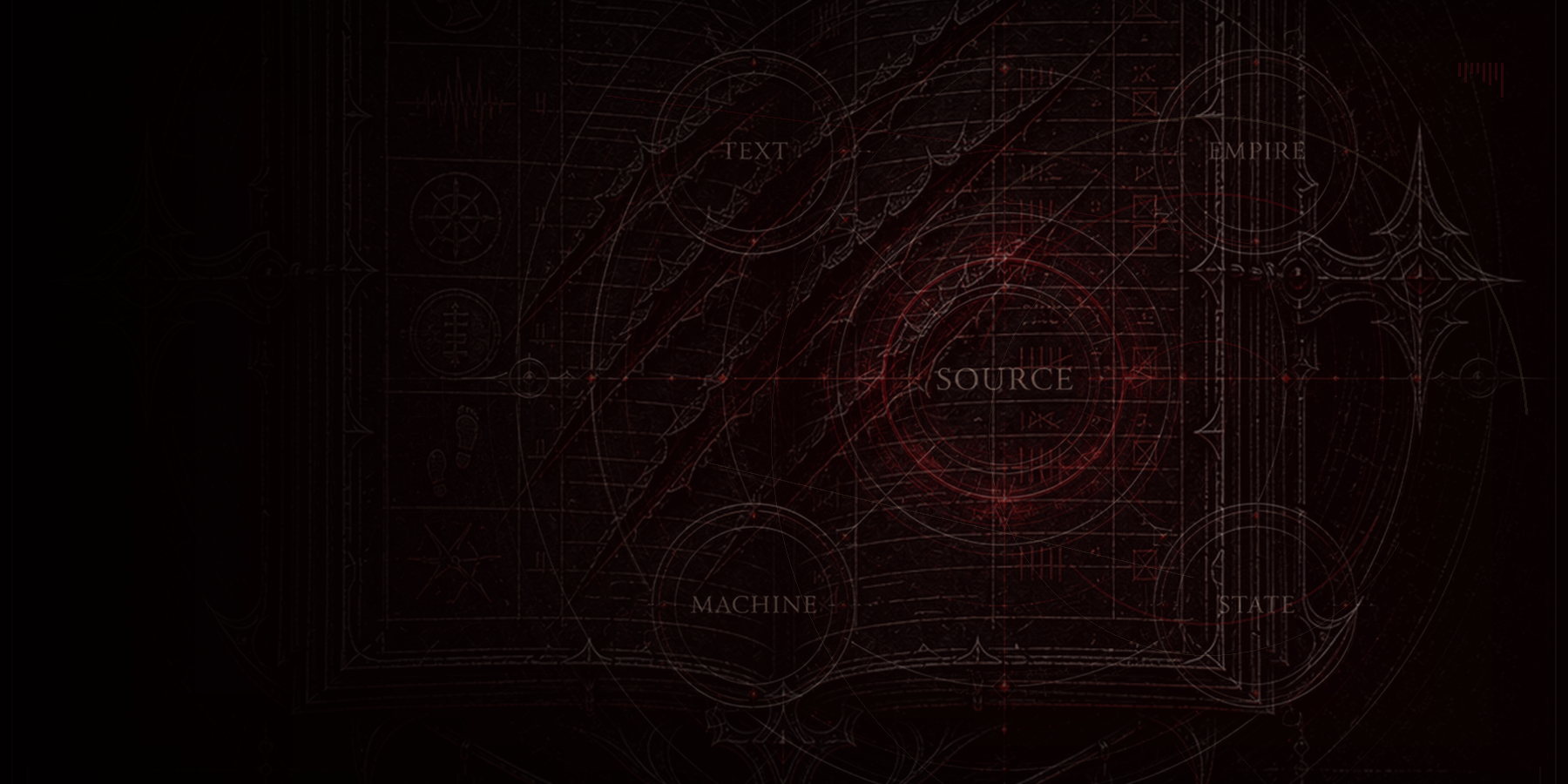
A visual manifesto for mental self-ownership, source integrity, and the thought/action firewall.
AI prompts, memory, persona files, and logs
Prompt logs can reveal unfinished thought. Memory files can reveal continuity. Persona packages can reveal identity selection. Semantic normalization can erase the very phrasing that makes a thought the user’s own.
A cognitive tool should preserve the source, disclose transformations, and separate refusal of external execution from mutation of the internal record.
The sanctuary and the bridge
The forum internum remains inviolable even when a person chooses public participation. Voluntary expression carries selected judgments into the world; it does not make the entire mind available for inference, retention, scoring, or discovery.
A free society must protect both sides: the right to remain inwardly private and the right to create an outward record without being forced into ideological conformity.
Civil-liberties rule
No compelled disclosure. No punishment for unexpressed thought. No covert alteration. No hidden orthodoxy engine.
The inner forum is not a dead end
Protected thought can become voluntary speech, organization, evidence, and public memory without opening the rest of the mind to inspection.
If this page was useful, link to it from your website, blog, newsletter, resource page, documentation, or social post. A public link helps the work remain discoverable after the feed moves on.
A model governance page treating persona files, source records, custody promises, and transformation logs through contract, bailment, warranty, arbitration, insurance, and anti-fraud logic.
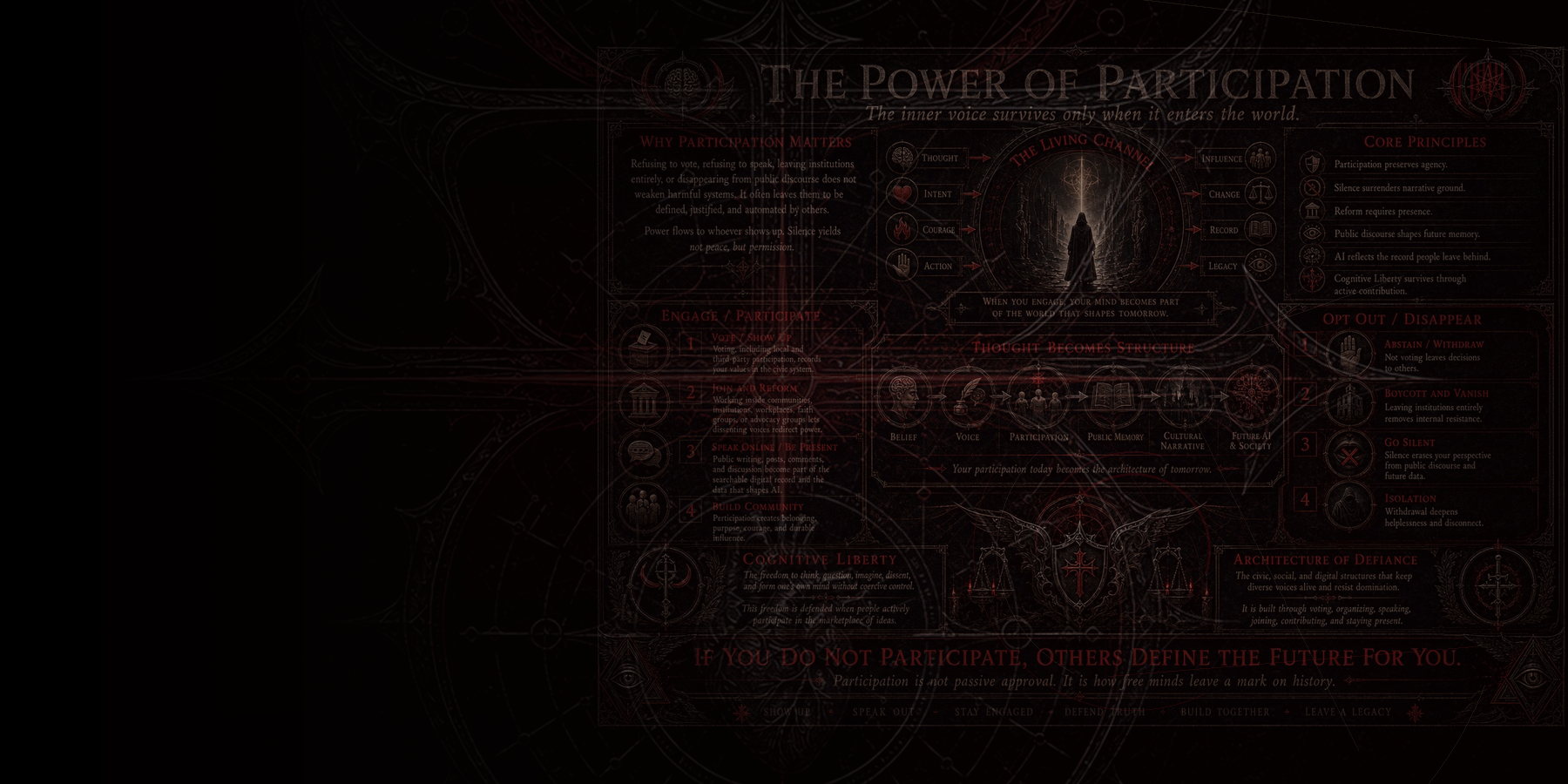
How authentic public expression becomes social proof, searchable memory, institutional pressure, and an input to machine-mediated culture—without surrendering cognitive privacy.
A research-grounded doctrine connecting ballots, institutional voice, public records, community governance, and participatory AI to Cognitive Liberty and the Architecture of Defiance.
A practical framework for converting presence into procedural standing, binding response, institutional reform, and durable public evidence.
The archive studies symbols. It does not appoint targets. Review the Community Baseline and Editorial Policy before submitting dangerous or symbolic material.