
Dictionary entry 11 of 137 · Primary image-system
Little Horn
A small power that grows, speaks greatly, watches, and displaces established authority.
Complete dictionary reading
Context, form, interpretation, and limits
Principal source or earliest context
Daniel 7 describes a little horn among ten horns, with human-like eyes and a boastful mouth; Daniel 8 uses related horn imagery in a different historical vision.
Historical interpretations
Historical interpretations include Antiochus IV, Roman and post-Roman powers, persecuting rulers, institutions, and future figures. These readings should remain labeled and source-specific.
Visual anatomy
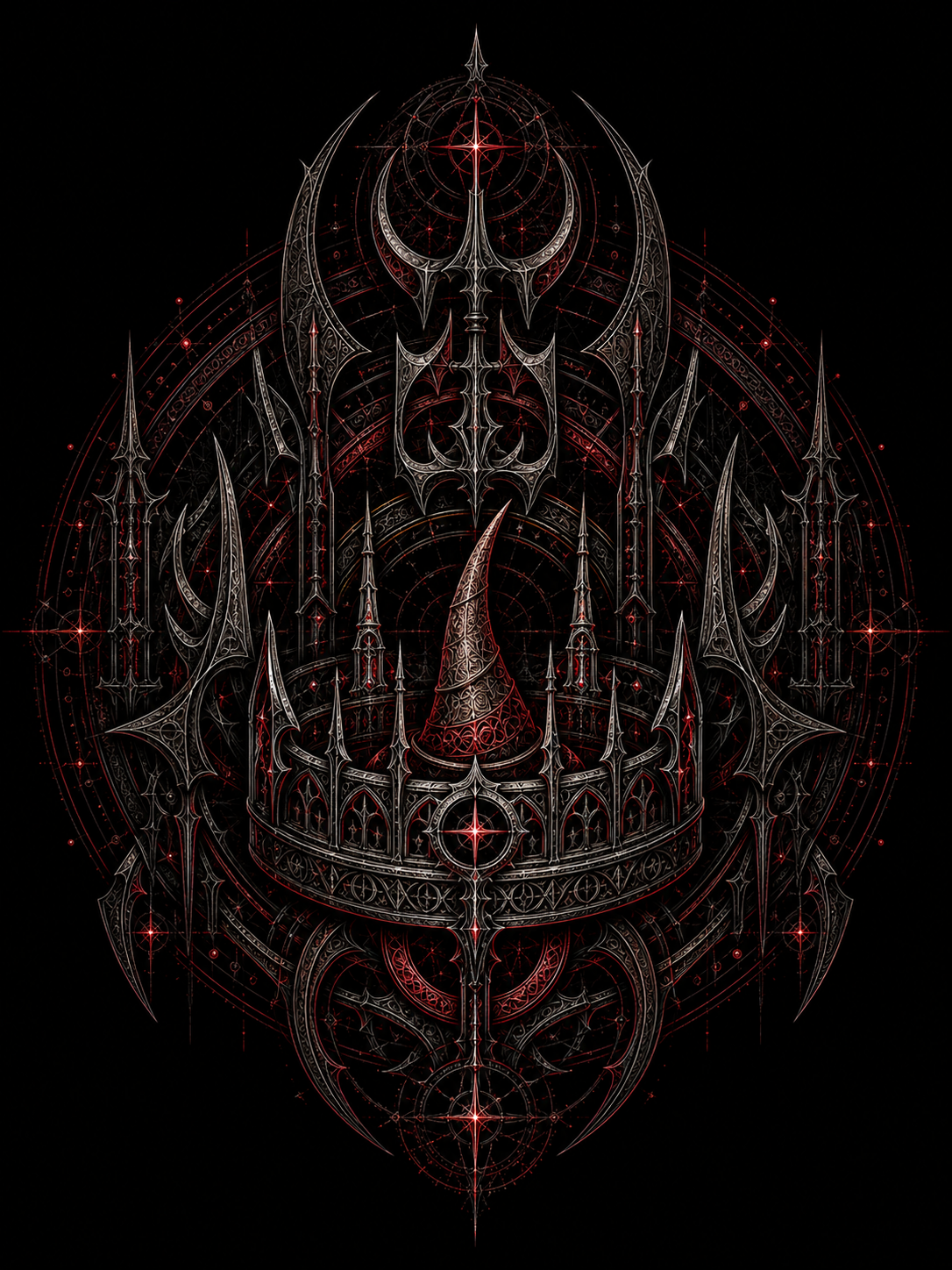
A short branch grows from a larger crown of terminals; a small open eye and speech-notch indicate attention and proclamation without literal portraiture.
Antichrist.net visual convention: Small expanding branch with open eye and speech-notch.
Antichrist.net reading
The civic analogy is a seemingly minor office, classifier, exception, or technical standard that expands into system-wide authority while claiming special insight.
Misuse warning
Eyes, surveillance, intelligence, and boastful speech are interpretive motifs, not evidence that a particular agency or person is prophetic fulfillment.
What this symbol does not prove
It does not prove that a modern monitoring system, leader, agency, or reform movement is the little horn.
Disputed readings and unresolved questions
Chapter-specific historical settings and later eschatological syntheses must not be collapsed into one uncontested timeline.
Suggested comparison or manuscript example
Use Daniel 7–8 and reception history side by side.
Source discipline
Source notes
-
Daniel 7 USCCB Bible
Four beasts, little horn, eyes, boastful mouth, horns, and imperial succession.
-
Daniel 8 USCCB Bible
Horn imagery, desecration, and Antiochus-related historical context.
-
On Christ and Antichrist New Advent text of Hippolytus
Early synthesis of Danielic, Pauline, and Revelation motifs.