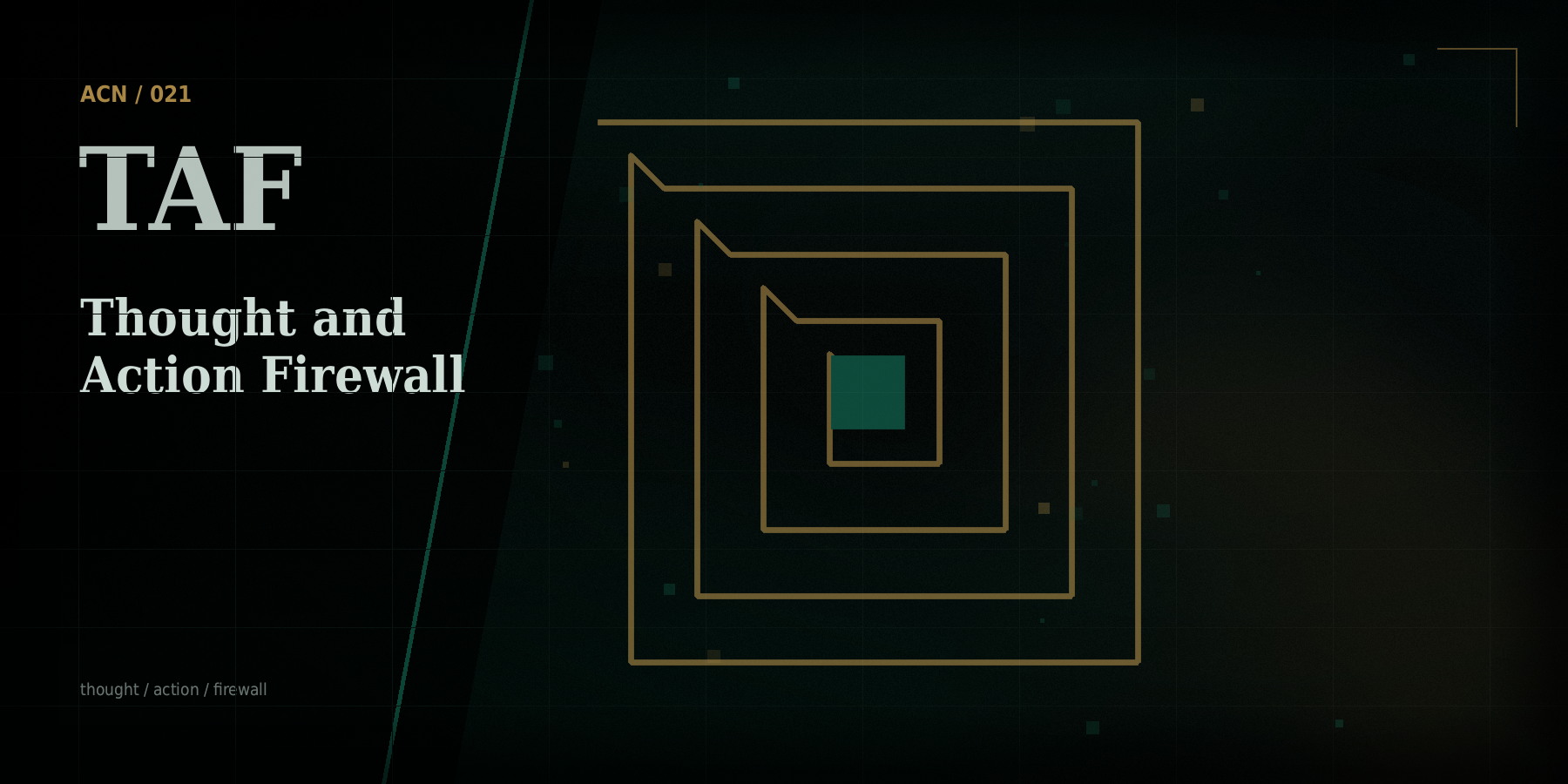
A charter that protects only legality-qualified thought has already conceded too much. It implies a second category: thought that can be administratively disfavored before it becomes conduct.
Antichrist.net treats that move as a category error. Law may govern force, fraud, trespass, theft, credential abuse, stalking, doxxing, non-consensual surveillance, targeted harassment, coercive impersonation, and comparable outward rights violations. It does not receive jurisdiction over the private formation of belief, doubt, fantasy, research, symbolic analysis, or unfinished reasoning.
The mind is not lawful or unlawful. It is not a jurisdiction.
Useful?
Link to this page so others can find the original source.
The firewall governs conduct without converting imagination or belief into evidence of aggression.
Why the wording matters
Legality qualifiers attached to cognition invite predictive policing of the inward forum. A model, platform, school, employer, or agency begins by saying it protects safe inquiry, then slowly converts inquiry itself into a compliance surface.
The reports identify this as the seed of algorithmic thoughtcrime: a system does not need to punish conduct if it can classify prompts, memories, personas, affect, and private drafts as risk evidence.
Bad frame
Protect only approved thought.
Better frame
Protect thought as such; restrict external execution for concrete rights violations.
Operational rule
Refuse execution, not existence.
A probability score is not justice, and a classifier is not conscience.
Replacement language
Avoid as protection
Use instead
Reason
lawful thought
private thought
Lawfulness belongs to outward conduct, not cognition.
lawful inquiry
peaceful inquiry or adult inquiry
The protected act is inquiry, not legal preclearance.
lawful choice
adult agency
Competence is presumed; coercion and fraud remain actionable.
illegal ideas
rights-violating conduct
The boundary is force, fraud, surveillance abuse, targeting, or concrete facilitation.
dangerous ideas
dangerous execution
Danger is assessed at deployment, targeting, or operational assistance.
Model clause
No person’s unexpressed thought, belief, imagination, private draft, memory record, or exploratory inquiry shall be treated as unlawful, scoreable, or punishable as such. Restrictions may attach only to outward conduct that constitutes or materially facilitates coercion, fraud, targeted intrusion, non-consensual surveillance, doxxing, targeted harassment, credential abuse, sabotage, or violence.
Where a system refuses execution on that basis, it must preserve the original source unchanged, provide notice where consistent with specific security needs, and support export and review.
f
Continue the conversation
What are your thoughts?
Join the Antichrist.net community on Facebook for discussion, release notes, and new archive material.
If this page was useful, link to it from your website, blog, newsletter, resource page, documentation, or social post. A public link helps the work remain discoverable after the feed moves on.
A U.S. legal zoom-in on stored prompts, mandatory reporting, voluntary disclosure, reverse-keyword warrants, suspicious-transmission bills, and the cognitive-liberty risk of treating questions as pre-conduct evidence.
A U.S. Stored Communications Act analysis for AI prompts, search logs, generated outputs, metadata, preservation requests, and cognitive trace minimization.
A U.S. dossier on keyword warrants as the closest real-world practice to tracking illegal information requests, with cognitive-liberty limits and mitigation rules.
Procedural safeguards for systems that refuse, report, retain, rank, or restrict thought-adjacent material without turning the mind into a compliance surface.
The archive studies symbols. It does not appoint targets. Review the Community Baseline and Editorial Policy before submitting dangerous or symbolic material.